Showing posts with label very good. Show all posts

Tuesday, February 11, 2014

Anime review: "Blood Lad"

Few months ago I saw an announcement for the "Blood Lad" and got an impression of some vampire-otaku comedy, which sounded nice, so I decided to add it to my wishlist. In the meantime I saw few good review of this series and I gave it a try last week.


"Blood Lad" starts with showing Staz, the main character, loosing time. He is a boss of a province in the demon-world and a vampire. But more important for the show, at least in the beginning, he is obsessed with Japanese culture, plays eroge, collect figurines and reads manga. So when his underling brings him news that alive Japanese girl, Fuyumi, is wondering his section of demon-world, he is in frenzy to meet her. Coincidentally, during this encounter he gets challenged by some upstart and while he has no problem in defeating him, unfortunately Fuyumui loses her life and becomes a ghost. Staz, being more or less a good guy, promises to bring her back to life, which will put him in line against female space-jumpers, his estranged and sadistic brother, demon world's aristocracy, etc.

"Blood Lad" starts very shounen and slapstick, and it stays like this during whole this season. So if you don't enjoy first one or two episodes, you will not like it later. You know the recipe: powering ups, big fights, lots of falling down, crazy costumes or character's designs... But for me, it hits the spot. It stays goofy, but it does get more serious later, as more complex plot elements start, so it can be enjoyed by more mature viewers. On the other hand, if has some pretty violent scenes. There are few nice jokes referencing other anime, manga and games - like "Dragon Ball".

Plot starts very simple, with Staz's quest to restore Fuyumi to life, but it soon becomes apparent that there are deeper currents going around. Not that Staz is necessarily aware of them. Unfortunately, the season ends when it starts to get very interesting. So I join the other reviewers - give us another season! I watched the OVA - it is direct continuation of the series, but also doesn't give a satisfactory (or any) conclusion.

There is not much to say about characters. They are typical for shounen anime: shallow, one-dimensional, somewhat ridiculous. But that is exactly what you need sometimes. There are constant additions, so we will have to wait for next season to see how they hold up.


When I started watching "Blood Lad", one of my first questions was "boing?". Yes, it definitely is. But even though this show has all female characters drawn anatomically dubious and it gives occasional fan service scene, it is far from ecchi.

I really like the visual side of this anime: bright, vibrant colors, good design of characters, fast-flowing animation. But here, voice acting is also very good! I especially liked Braz, who has a great voice - like a real vampire, low, quiet and snake-like.

To summarize, if you like wacky shounen anime with some fights and fanservice, "Blood Lad" is an anime for you. Especially that it has only 10 episodes, so you can finish it in a day or two.

Sunday, February 2, 2014

"Vorkosigan Saga" reread: "Cetaganda" by Lois McMaster Bujold

As I planned, I continue with my "Vorkosigan Saga" reread, inserted occasionally between other books. This time it was "Cetaganda" - as I said I was reading the books in internal chronology order, starting from "The Warrior's Apprentice".


In "Cetaganda", Miles and Ivan are sent on a diplomatic "mission" - as high nobles of Barrayar they are to attend the funeral of Cetagandan Empress. Cetaganda, as in Barrayar's greatest enemy. And they are told to behave. This changes even before they set a foot on Cetagandan territory. The two of them are victims on random assault, during which Miles come into a possession of some Cetagandan trinket. A trinket that everybody wants back and that can decide the future of Cetaganda...

"Cetaganda" is a book little off the tracks. By that, I mean that even it fits in internal chronology, it is more of a side book. You won't miss anything if you skip it (well, nothing except much fun). Events here don't affect later books, except in small details (like the medal, or as old love). So I was a bit in doubt to read it or skip it, since I remember it quite well and know that it is not very important in larger scheme. But as I also knew it was a very fun read, I decided to reread it.

Miles is here between big roles. He is not a young inexperienced leader as in past books, nor is he hyperactive professional megalomaniac as in next few following books. He continues his habit of manipulating his superiors when they (potentially) bother him. He also continues to "bully" his cousin Ivan, even though Ivan more or less lets him do it. All other characters are pretty well written, even those that only appear once or twice. Bujold can make them feel three-dimensional just in few sentences.

As for plot, it is combination between action, detective investigation and a little bit of comedy.

Bujold continues to do well with setting. It is imaginative so much it would not pass any tests, but it is written so unobtrusively that everybody just accepts it as it is.

One of my favorite parts of this book is in the end, when Miles receives his medal. And I like the scene where this same medal appears in few books later!

As I said, "Cetaganda" is not an important book in this series, but if you skip it, you will miss all the fun. A great book for all fans of the series.

Thursday, January 2, 2014

Book review: "The Proof House" by K. J. Parker

After "The Belly of the Bow" I was dreading to read its sequel, "The Proof House". But K. J. Parker's writing is so good and he has more books in the same setting, so I just couldn't skip this one.


In "The Proof House" we again meet with Loredan family and their friends. Few years after the events at Scona, Baradas Loredan is currently a sapper in Empire's army, besieging the town of Ap' Escatoy, a siege that has taken some years. He more or less accidentally terminates the siege and becomes a hero of the Empire, which earns him a sinecure at the so-called Proof House - a factory for producing and testing armor. But this position won't last long, because Empire has decided to conquer the Plains, ruled by King Temrai, and who better to lead it than Temrai's old enemy, Baradas...

First, the setting gets another large expansion, with introduction of the Empire. It is a vast, continent spanning empire, where you need weeks to travel over it even by usage of fast carriages at Post Service. It is ruled by Sons of Heaven, tall and aesthetic people based on Arabs (partially). You can get best impression of Empire by the importance it puts on Perimadeia, Shastel, Scona and Island - it dismisses them completely. I read somewhere that Empire will take a much larger role in following books.

One of distinct features for this trilogy was scenes that deal with the Principle. I can't say exactly what, but they are different here than in last two books. More strange, and more abstract. And of course, the explanations actually confuse you more.

Story is typical for Parker, with lots of unexpected twists and side-stories. Temrai's plot is funny at the beginning, but you ask yourself for how long, because this is Parker after all... There are a lot military scenes and parts, which are done with a lot of details and expertise. Politics play a large part, especially with the Island sub-story.

There is no new characters in "The Proof House", except few unnamed Sons of Heaven and one Island trader, so you know what you can expect. They are really a piece of work. I don't want to reveal any spoilers, but you can expect bleak ending for most, or you could say all, characters... There is a place in the book where Iseutz does a great summation of the Loredan family. Baradas is really scary, which I didn't realize before.


But I presume that you are wondering about the feel of this book. After that surprise in "The Belly of the Bow", I was prepared for everything in "The Proof House". It is a very bleak book, mixing fun and revulsion between scenes. Casual storytelling of violence of war reminds me of Erikson, even though with more extreme examples. One important feature: battles are only lost, never won. This is not a sick book like middle one, but the ending... I don't know whether to laugh or cry...

I have to mention that Parker is a great writer - for first two chapters he is focused only on hear, taste, smell and touch - there is not one clue enabling you to visualize the scenes.

All in all, I am satisfied with "The Proof House". It is not for everyone's taste, with its violence and bleakness. But if you like "Colours in the Steel" and survived "The Belly of the Bow", I think you will enjoy this one. For the whole "The Fencer Trilogy", I give it a solid passing mark.

Sunday, September 15, 2013

Anime review: "Sakamichi no Apollon"

"Sakamichi no Apollon" (or "Kids on the Slope") won several awards last year and it is a josei, so it was given that I would watch it sooner or later. It turned out it was later.


"Sakamichi no Apollon" tells the coming-of-age story of three friends: Kaour (Bon), a rich boy with no friends, due to his often transfers and movings; Sentarou (Sen), a troublemaker who often misses school; and Ritsuko (Richan), Sen's childhood friend whose father owns a music store. For some unknown reason, Sen takes liking on Bon and the two of them start hanging out at Richan's place, playing jazz sessions. Because actually, Sen is a passionate drummer, while Bon learned piano since childhood. The three of them live through first loves, occasional fights and jazz music.

This is a pretty short anime, with only 13 episodes, so there is no long story like in "Nana" or "Hachimitsu to Clover". But on the other side, plot sometimes skip months and in such way covers really much time. In the end, it covers their whole high-school. It made me surprised several times, like with that early confession - I didn't really expect it so soon. The beginning was also good and got me hooked immediately: light, with no real subject, but hinting at drama and future topic.

The anime covers an unusual epoch - the 50s in Japan. This is the first time I watched anime covering this period of time. There is an interesting sub-story of Jun'ichi and Jurika, including political activism, student riots and Japan's after War history. Music is an important part of this anime, but not the main topic - character's relationships are what this really is about.


It is really a coming-of-age anime and it has some good drama. Not the usual awkward moments you would expect: Bon always says wrong things instead what he really wants, but it is so with most people. Anime doesn't go in making extreme emotional reactions, but goes lightly about it.

The ending was very surprising. Josei anime usually have some kind of bitter-sweet ending, but this really took me by surprise.

The animation and design is good, but not something extraordinary. Voice acting was very good, though. I don't like jazz usually, but even I was able to enjoy the music here.

"Sakamichi no Apollon" is a short but very good josei anime. Not among the best of genre, but with good and likable characters, fast story and some really nice drama. A good anime for everybody who likes josei.

Sunday, September 8, 2013

Book review: "Feast of Souls" by C. S. Friedman

I haven't read anything by C. S. Friedman before, but I had one or two of her series in my wish-list, since I encountered her name on several top-lists and reviews. I was choosing between "The Magister Trilogy" and "The Coldfire Trilogy", and finally picked the former, for no special reason, and bought "The Feast of Souls", the first part.


"The Feast of Souls" takes place in imaginary medieval world. Among regular people, there also exist witches and Magisters. Witches (both male and female) are able to do magic (witchery), but it costs them their life-force - the bigger the spell, the larger the price. Usually witches die in the middle years, except they are miserly with their power. On the other hand, Magisters, who are all males, have unlimited power, and they guard their secret hard. Magisters usually act as advisers to kings and rulers, but in truth they are the secret power behind thrones. In such world a young witch Kamala comes to a hermit-Magister Ethanus to teach her how to become the first female Magister... Several years later, Prince Andovan, one of sons of the most powerful King Danton Aurelius, become sick with the mysterious illness called Wasting. His search for the cause will set him on a course to Kamala, and both of them toward their destiny as ancient enemy of humanity begins to appear again - the soul-eaters!


As it is, such setting as in "The Feast of Souls" is a pretty much typical for fantasy. Medieval society, magic, Princes and Queens. I admit that the witches/Magisters thing is clever, but you are able to guess most of the details pretty soon and accurate. Even after first quarter of the book I was hoping for something to come and surprise me. I did get my satisfaction in second part of the book when Northlands and the Ancient Evil come into play. I must admit that the ikati come as nice villains and looking forward to learn more details. I also liked focus on Magister's society and rules in later stages, which are pretty detailed.

The plot is also typical, but it has its strong points. There are several players that are left unknown, so we have enough reveals to expect in second and third book. Again, the ikati storyline is the most interesting part of the plot. The big part of suspension is curiosity how Kamala and Andovan will be able to sort out their differences, because it is obvious from the start that they will be forced to do so. And we are not left disappointing - their (or better say, his) resolution is very surprising and interesting - and leaves her consistent.


There are lots of characters and again, lots of to discover in further books. Kamala doesn't really become a character until the second half of the book. Friedman writes her well, giving her much and important doubts to dwell upon. Andovan is pretty much common characters, but that doesn't mean he is boring. I especially liked Colivar's characters - and hope to learn more of his history. Queen Gwynofar is a very interesting character. Although this is not the rule, female writers usually create very good female characters (or at least more complex) and so is the case with Friedman.

Again, I liked the second half of "The Feast of Souls" more that the first. I really have to admit the book had a good ending - surprising and clever. And opening space for the next book.

Of Friedman's writing I can't say much. She has interesting characters, and gives some exciting chapters, but doesn't insert many original and unique fantasy elements.

All in all, "The Feast of Souls" is a solid fantasy book - not the best I have read, but far from worst. I have enough interesting parts to justify continuing with the trilogy. I think readers who focus on characters more than on plot or setting will be more than satisfied with this book. Also the fans of Robin Hobb.

Monday, August 26, 2013

Book review: "The Dying Earth" omnibus by Jack Vance

I have been aware of Jack Vance, his opus and his fame for a long time, but I don't remember reading anything his before. When I saw the omnibus containing all his "Dying Earth" stories, I decided it was an opportunity to fill up my knowledge of older classics, and of course, to read something good.


"The Dying Earth" is not a novel. Even its parts are not novels, but a collection of short stories. First part, "Mazirian the Magician", is just a collection of short stories, with stories connected only barely with setting and some characters. The second two parts, "Cugel the Clever" and "The Skybreak Spatterlight", are novels (actually, fix-ups) telling stories of travels of Cugel, who travels the world trying to get home and exact revenge against a magician who sent him away. And the last part, called "Rhialto the Marvellous", is composed of three longer stories with common characters. Just to clear it up, these are mostly comic stories.

First, "The Dying Earth" is different from anything I have read so far. Maybe "Discworld" stories by Terry Pratchett are the closest thing to it. The world is full of magic, maybe even too full. It reminded me on old Conan stories. There is literally magic on every step: spells, creatures, objects... Vance doesn't even care to try to be realistic The "plots" takes place on Earth, but long in future, when the Sun is closing to its death and magic is again present on the world.

The style of the stories if definitely vintage, not something you would mistake for a modern fantasy. A bit pompous, you could say. Many concepts here looked familiar to me - and I realized that many modern fantasy writers copied Vance's ideas. I was there Chine MiĆ©ville got his idea for "The City & The City", and some other ideas used by new authors. If Vance patented his stories, every fantasy writer would have to pay him royals for using his book.

Since these are stories, you don't get to know the characters too much. This changes a bit in Cugel's stories, where we spend much time with him. But when Vance decides to focus on a character, he can do wonders (e.g. Drofo the worminger-sage). I found it unusual at first how everybody just keeps running all around the world; nobody stops to make any strategy. Women are mostly either victims or evil, or sometimes innocents in need of male guidance.

As of my impression. First part consists of six stories loosely connected. I can't say I really liked them, but they were OK and sometimes funny. Two Cugel novels were much, much better. They had a structure, a regular main character, an ultimate goal. And they were very funny! They are a bit long, but I didn't mind it at all. On the other hand, Rhialto's stories are not quite as good. Vance is obviously trying too much where he was effortless before, and I wasn't able to enjoy them. And even though you can't say that this book was planned to be consistent, these last three stories were even more inconsistent with previous...

But all in all, I had more good times than bad with this omnibus. "The Dying Earth" is definitely something that any real fantasy-fan needs to read, at least just to know where many of ideas came from. Maybe not a book to buy, but definitely a book to read.

Monday, August 5, 2013

Book review: "Heirs of the Blade" by Adrian Tchaikovsky

I've been following Adrian Tchaikovsky's "Shadows of the Apt" series for quite some time now (counted in books, at least, not in years). Even though it cannot be said I am super-excited whenever I read another books in series, it is still an interesting series and I would recommend it to anybody who wants fantasy in a bit of different wrapping - steampunk, insect-based races, magic vs. technology... "Heirs of the Blade" is the seventh book in series that I have read and there is at least couple more to go.


"Shadows of the Apt" follows a curious cycles: odd books are focused more on smaller stories of particular characters, while even books are more epic and deal with world-scope events. "Heirs of the Blade" is typical odd book, dealing with story of Tynisa and Che. After her father's Tisamon death few books ago, Tynisa wandered off in search for some kind of resolution, depressed and feeling guilty for numerous deaths she was not able to stop. In her search, Tynisa has come to Commonweal, a home of her dead love Salme Dien. She is about to find that Commonweal is not an idealistic and romantic place she imagined based on Salma, full of valiant knights and caring nobility. On the other side of the world, in Khanaphes, after following Che, a shade of Tisamon escaped and is now on course to haunt Tynisa. Cherwell, now accompanied by Tharlic, is aware of that and is willing to do what it takes to stop it, even if it means embracing her new destiny of Inaptitude...

As I said, this is a smaller scope book and is mostly concentrated on Tynisa and Che. But we do get some glimpses of story to come, by POVs of Wasp Empress Seda, a future Queen of dark magic; by Angved the engineer, and by Preada and Ammon. I did expect more from these plot-lines, but they end pretty abruptly. I presume they will be the focus of next book in series, "The Air War".

The good thing about the plot is that is ti pleasantly confusing and pretty unpredictable. It is really hard to guess what will happen next, but it doesn't fell forced and unnatural. I don't know why, but I came to think about this book as very long, even though it is only some 350 pages.

We follow mostly the well-known characters like Che, Tynisa and Tharlic, but there are some old appearing again, like Gaved the Wasp and Seda. The new characters, especially Dal Arche and his bandits, and Varmen, are also very good. I always wondered why focus Che as a central character, but now the things are coming to place. And Seda is one pretty impressing character...

Tchaikovsky become much better with words in time. He was all right before, some sometimes he did insert some clumsy phrases - now the story is nicely flowing. I like how different people tend to concentrate of different things: some on architecture, some on military and defenses, some on architecture... He also did very well with presenting strangeness of Commonweal. And the scene with beetle-stag and mantis is an awesome one - it presents how unique the setting is very well. Another think that deserves mention if the final duel, which was written with much details and realism.

I know this is a somewhat short review, but it is not necessary to say more than that if you liked previous books in "Shadows of the Apt", you will more than like this "Heirs of the Blade". A recommendation for both the book and the series.

Monday, July 15, 2013

Book review: "Blood and Bone" by Ian C. Esslemont

Even though I liked "Return of the Crimson Guard" and even "Stonewielder", after debacle with "Orb Sceptre Throne" my enthusiasm for work of Ian C. Esslemont has dropped down considerably. His new book in Malazan setting, "Blood and Bone" has been out for couple of months. I would usually buy it as soon as it was out, but this time I just wasn't into it. Especially after reading some tepid reviews on Amazon. But in the end, I consider myself a Malazan-fanboy so I just could not leave it unread for long.


As is usual for Malazan books, there are multiple plot-lines, all connected by the fact they are happening on Jacurucu, a continent only mentioned by Erikson and Esslemont until now. Thaumaturgs, a ruling mage-class of largest nation on Jacurucu is on the move: there is another invasion targeting the Jungle of Himatan, which covers whole east half of the continect and is ruled by Ardata, Queen of Witches and Mother of Monsters. Led by Commander Golan, the army will find itself attacked not by enemy soldiers, but something even scarier, the Jungle itself: heat, humidity, wild animals, inhabitants from nightmares, bugs and diseases... But before they even reach the Jungle, on their way they will travel through poor villages between their nation and Himatan. In one of such villages, young woman named Saeng, with unique connections to the dead of Jacurucu, will be saved by her brother Hanu, who was taken some years ago to become Thaumaturg strongest weapon, stone soldier of jakshaka. In the meantime, in south, members of several Adwami tribes, including the young prince Jatal, are gathered by the call of foreign warleader called Grey Ghost, who asks of them a temporary truce and offers a common goal: the greatest raid on Thaumaturg capital ever! And on Stratem, remnants of Crimson Guard have gotten a new contract, by Ardata herself: to get rid of Skinner and his Disavowed.

Somewhere I have read that this book is intended for Malazan fans and nobody else, and I would agree with this statement. Even though is much simpler that Erikson's books, "Blood and Bone" would be incomprehensible to non-fan. There is no real introduction to characters, setting and plots, and it is expected to be familiar with prior events to appreciate all nuances and details. So, if you haven't at least read Esslemonts previous books, don't even try reading this one.

I must say I was pretty surprised by this book, and pleasantly so. The pace is pretty slow, but the book is very interesting. Some would consider it dragged and too slow, but I kind of liked it such. Esslemont even gets philosophical a la Erikson on some occasions. Esslemont is not natural at being mysterious in writing as Erikson is, but here he tries and succeeds most of the times - even though he can get tiring sometimes.

What I really liked in this book were the characters. There are some old characters, but most of them are new. There are even some old hidden as new. In general, Esslemont is much better with his own characters than when he uses and recycles Erikson's. I liked Jatal, who is noble and honorable so much that you know that it will not end well. Pon-lor starts as side-character but in the end becomes one of most important and best. Commander Golan and his nemesis Thorn are simply a great duo. But all other are interesting, too. I can only compliment Esslemont in succeeding making all parties look good and nobody bad.

Even though the book takes place on Jacurucu, you will not found it too revealing about its secrets. I know I am boring and repetitive, but Erikson would be handling it better. Nevertheless, it is interesting as it is. I liked how we get a context of where this book fits in. The descriptions of the jungle and the dangers luring there are pretty good. I was surprised how gritty and even disgusting things became on several occasions, like with the worm-parasites!

All in all, "Blood and Bone" was a pleasant surprise. Again, the book is not on par with Erikson's, but it provides the Malazan fans with an interesting plot and a revelation of new part of setting. So I would recommend it to all fans of Esslemont - though pure fans of Erikson should be careful with it.

Saturday, July 13, 2013

Anime review: "Mahou Shoujo Madoka Magica"

"Mahou Shoujo Madoka Magica", or "Madoka Magica" hereafter, is not a show I would usually be attracted to, at least considering the style of its animation and its cover-picture on AniDB. Therefore, I pretty much unintentionally avoided it two years ago when it came out. I also avoided it the year later when it got several awards for the pass year... But after watching other high-rated anime, "Madoka Magica" kept jumping out on first places and getting nice reviews, so I finally decided to give it a try.


As I said, "Madoka Magica" at first looks as a typical shoujo action anime with magical girls (mahou shoujo): cute flat-chested and silly/clumsy protagonist, cute uniforms, lots of pink, lace and winking.... Setting include middle-school girls who enter a contract with some kind of cute-cat-look-a-like demon who gives them magical powers and a free-wish while they in return have to fight evil "witches" (nightmares) who attack innocent men and women...

Well, while it certainly has elements of mahou shoujo anime and it looks like one, "Madoka Magica" hides a big surprise for its viewers: it is actually a very powerful seinen tragedy! While it is a bit angsty toward end, that is to be expected of such anime, and the complete reversal of expectations negates any negative experience...

As you noticed, I am trying to avoid spoilers as much as I can. But I just can't avoid talking about the main villain... First, you really don't expect her to be a villain, especially considering her looks. Secondly, he is really a psychological masterpiece! It is scary how good she is at being passive-aggressive and manipulative toward an innocent girl... I am fan of grittiness, but there are some lines you just don't cross...

As I said, it is really a tragedy - it becomes evident after all that Mami's happy talk. And definitely it is seinen: the more Homura tries to do what is right, the worse it gets.


Other remarking sides of this anime are the visual side and the music. The music is very good, including a song by Kalafina. The show has nice vibrant colors, which together with intense music and the action at the beginning, made me like this anime instantly. As I said, design of character is typically shoujo, but this you just have to accept. Things change when they enter the "witch domain", where it looks like some kind of patchwork and it is very interesting. There are 12 episodes totally.

All in all, "Mahou Shoujo Madoka Magica" was a pretty good surprise, but a kind of that I would recommend mostly to those who like seinen, and potentially josei anime. I hope those will forgive me my little misdirection in review and be thankful for it later.

Saturday, October 6, 2012

Book review: "The God Engines" by John Scalzi

I've been hearing lots of good things about John Scalzi for some time now, but I haven't read anything by him yet. I know his is famous for over Internet for his opinions and blog, and that he wrote mostly SF. So when I decided to occasionally buy SF, I added one of his books, "The God Engines", on my Amazon wish list. I have some plans for my reading this fall and winter, which I will announce in one of my next posts, so I decided to read something stand-alone last week and I picked this.


I've been surprised how "The God Engines" is similar to "The Hundred Thousand Kingdoms" (which I read not so long ago) in premise. In both books we have gods who are chained by one other god and forced to serve humans as tools and weapons. Here, gods are literally chained, in hulls of space-ships, and used are their primary source of power. As long as the crew maintains its faith, they have nothing to fear and the god can be punished into submission. But when Captain Tephe and his crew is sent on a secret mission, they will find their faith in question, and who can then say what will happen next...

My second surprise was the shortness of this book: with 136 pages this is only a novella. But it is my own fault for not reading more about what I was buying. I am more attracted to longer books, and I was able to finish this book in two days, reading only few hours each.

But the book is pretty good and I can see why Scalzi is famous. It is a type of novellas that I used to read in collection that were published few years ago in Croatia, gathering a lot of older SF hits (Clarke, Haldeman, Hamilton...). The setting is very imaginative, and although we don't see much of it, looks pretty solid. It has a curios mix of high technology and religious dominance (something like in later books of "Hyperion Cantos" by Dan Simmons). The story is also very good, but I was delighted by the ending: I really didn't see it coming.

On the other hand, I am wishing it had a bit more meat, because the last part feels a bit rushed.

"The God Engines" is a very good novella and I would recommend it to everyone, SF fan or not. But I wouldn't recommend buying it: borrow it or buy it in some larger collection.

Sunday, September 30, 2012

Book review: "The Sea Watch" by Adrian Tchaikovsky

I've been reading "Shadows of the Apt" series by Adrian Tchaikovsky for quite some time; I now finished 6th book. The series started very good, with a curious mix of fantasy and steam-punk, taking place in interesting setting. And what's even better, the series kept improving with each book. It wasn't the best or favorite series for me, lacking empathy and emotional impact arising from characters, but I was looking forward to reading "The Sea Watch". I have to admit that I was surprised how good this book was!


Tchaikovsky has chosen a curious pattern for his books. One would be set locally, giving feeling of a single mission/quest, and then the next one would encompass things of different scale, explaining the effects of previous book on global level and expanding on it. Series started bounded in one place (Lowlands), but later expanded the world quite much. What I found interesting was the way it showed the impact of events in Lowlands slowly spreading around and affecting nations back and forth. Also, it is interesting to follow development of Collegium politics and changes in the society through longer period. Even though events took place in maybe three years, it feels much longer.

So, following tradition of even books, "The Sea Watch" is another "global" book. Last book, "The Scarab Path", followed Che on what was supposed to be a diplomatic and research mission to far-away Khanaphes, from which she never came back to Collegium. Here we follow mainly Stenwold Maker, her uncle. Stenwold did got his parts of action, especially in "Salute the Dark", but I never seen him as one of main characters - more as a driving force behind them, gathering and directing them. But this book is about him and told mostly from his perspective. After the war with the Wasp Empire, Stenwold included himself more in the political live of Collegium and leaving his more active role as "spymaster" to become a diplomat. His current affairs include establishing diplomatic relationship with the Vekken (one of their enemies), backing his political ally Jodry Drillen in elections and calming various minor problems in the city. After he gets news of his niece leaving Khanaphes in strange circumstances in company of his greatest enemy, he feels devastated and responsible. But he will have to put his personal affair to side after same force starts attacking and robbing Collegium's ships. It will turn out that Wasps aren't the only people poised on Collegium...

The book has a very nice start and Tchaikovsky really developed Collegium society and politics in details - it looks I am fan of even books. I'll be blunt and just say out that this book introduces a new race, the sea-kinden. This is not a spoiler because they have been sideways-introduced before (in "Blood of the Mantis"), there are mentioned at first few pages, and of course, they are shown on the front-cover, coming out of the water quite looking quite sinister. So, a reader will know that they will show sea-kinden, but particular details of it will be quite surprising. Not giving out too much information, but there will be a big surprise and turn in book when they finally do show. I really enjoyed the political maneuvering, sleight-of-hand and cloak-and-dagger stuff - this book is read like some kind of an thriller set in fantasy setting.

Although I am not a fan of maritime settings and especially not of pirates, this book was good in this part. Fly-kinden pirates are done pretty well - criminals with sense of honor. When sea-kinded come forth, we get to see some new part of the setting and I must say I was impressed. Tchaikovsky was really able to convey the sense of strangeness to readers. The Pelagists were the most memorable thing for me, especially Lyess.

As I said, this book is pretty much about Stenwold, but there are others. We get to see much new characters, but we will also see some of the old-ones leave us. Stenwold is shown as a really capable guy, which wasn't show in previous books, not even in "Salute the Dark". It is funny how all other Beatles think that Stenwold is some action hero with blood on his hands (which he actually is, when you think about it), while he sees himself as old and week, a burden to the rest. But several times in the book you see him from some third character for what he really is: a hard statesman and leader, ready to make and do the difficult decisions - but also unaware of that about himself. Other characters are all good, but I must mention Teornis. We have known him for four books now, but this is the first time we have been in his head. And as with sea-kinden, with Teornis Tchaikovsky was really successful in capturing the strangeness of his races. Particularly, I mean about Spider's duality - to really like and admire your enemy.

The books in series vary much in length - this one is around 700 pages. I can't pinpoint any flaws in the book, but we still lack real connection to characters. But Tchaikovsky is getting better at this and I hope next book will stay good as this one. One thing just came to my mind - I don't think that Tchaikovsy ever discussed religion of the races in his books, except in "The Scarab Path", and that was only locally.

So, to conclude, "The Sea Watch" was the best book in series so far and I believe all fans would agree with me. As for the series itself, "Shadows of the Apt" is growing to be one really good series, best suitable for those who like a good setting and have a patience to wait for the action to really take place.

Sunday, September 16, 2012

Book review: "The Hundred Thousand Kingdoms" by N. K. Jemisin

Last weekend I started (and finished) reading "The Hundred Thousand Kingdoms" by N. K. Jemisin. I've had this book in my wish list for quite some time - ever since it was published in 2010. It got several award and nominations for best newcomer and etc., and its premise sounded very interesting. I was looking for something new to read after finishing "School Rumble" manga, and decided to finally give it a go.

(a very good front cover!)

"The Hundred Thousand Kingdoms" is told from a first-person point of view, with voice of Yeine. Yeine is a granddaughter of Dekarta Arameri, a supreme ruler of the world. Now it is important to introduce the setting a bit. Several hundred years ago, a war started between Nahadoth, god of chaos and dark, and Itempas, god of order and light. Itempas was and punished Nahadoth, with some of his offspring, to server as slaves to his highest servant, priestess Arameri, and her successors. The Arameri, using gods as formidable weapons, managed to conquer the whole world set a government with them at the top - and becoming decadent and eccentric (as in polite word for crazy) in the process. Now let's get back to Yeine. Some twenty years ago her mother Kinneth, a designated heir and very proper Arameri (cruel and manipulative), abdicated and left court to live with her lover from backyard and barbaric land of Darre. After her sudden death, Yeine is called to court by her grandfather where she is suddenly pronounced as one of three potential heirs, together with two her cousins. To become a real heir, one of them must defeat and force another of them to accept them as heir - which usually includes the death of third one. So Yeine is left to learn fast about gods, history, her family and manipulation, because the last hour of her grandfather Dekarta is coming fast.

I must admit that Jemisin came up with some really great concept and setting. The gods-part is based partially on Hinduism (light-dark-shadow; order-chaos-balance), but also on old Greek myths, where gods have human personalities, are petty and vengeful, mingle with humans and so on. But on the other hand, she finely succeeds in making Nahadoth and others strange, inhuman and magnetic. This is also true for the Arameri and the whole court - they are not someone you would want as a family, but they are intriguing. I did have a filling that she maybe should have made them even stranger - being a member of family whose word is absolute law on whole world should result in some strange personalities. Also, is this Arameri having access to ultimate weapons some pun/metaphor with Americans and nuclear bombs?

Plot is an interesting mix of power struggle, detective story and exploration about Yeine's family and history. Much appeal of it comes from the narrator-type storytelling. Yeine is not exactly an unreliable narrator, but she is prone to wandering and skipping. The pace is fast and intense - Yeine is not really a passive person. Expect some big turn-overs at the end - not something you will expect when you start reading.

Other characters are also interesting, although I could appreciate more development, but since this is a first-person POV, it can be expected that all focus will be but on Yeine and her interests. Sieh's character seems quite familiar, but I can't remember from where. I am intentionally skimming on descriptions because this would result in spoilers.

Jemisin's writing was fast and good. There are some violent and some sexual scenes, but nothing over the board. I liked the Nahadoth/Naha thing. There was some humor, streaming from Yeine's observations, but this is in general a dark book, I think.

Although I had some great time with this book, there are some small surprises. When I bought the book, I expected a first part of epic-fantasy trilogy. But this is not really a trilogy. "Hundred Thousand Kingdoms" is a self-contained book with definite ending. Two sequels, "The Broken Kingdoms" and "The Kingdom of Gods", are taking place in the same setting and after these events, but there is nothing in this book that asks for sequel. And second thing, the book was really short: I finished it in two afternoons and one evening.

But these are not serious objections, just misplaced expectations. "The Hundred Thousand Kingdoms" is a very good and unique book. I would recommend it to everybody - it has unique setting, clever and interesting narrator/main character and some fast and surprising plot.

Sunday, August 26, 2012

Book review: "Hawkwood and the Kings" by Paul Kearney

I have encountered "Monarchies of God" series by Paul Kearney in a some review at SFsite.com some time ago, although I forgot most of the details. I had some vague impression of Hawkwood being a mercenary leader in Middle-Age based Europe with existence of magic. When Amazon.com started pumping my recommendation with historical fantasy books because I had "Hawkwood and the Kings" in my wish list, my interest somewhat dropped. But the series still had good reviews, there was some recommendation by Steven Erikson (I don't usually care about front-cover generic recommendations) and it was pretty short (only two omnibuses), I decided to give it a try.

I first planned to do two reviews, one for each books in the omnibus ("Hawkwood's Voyage" and "The Heretic Kings"), but when I started reading the second book, I realized that there is no real distinction between them - the plot goes on immediately. This is actually one book split in two (or more probable, five) chunks.


It is pretty hard to comprise the story of "Hawkwood and the Kings" in one paragraph. Even though these books are very short (416 pages for the whole omnibus), there is a lot of going on. These books are clearly based on 15th and 16th century Europe, during the Turkish Invasions and discovery of American continent. We have several unconnected plot lines viewed from different POVs that make a pretty detailed picture of the setting and the plot. But this is not a historical fiction - history is different, geography, mentality... And of course, this is the setting that contains things like magic, Thaumaturgies Guild, werewolves, homonculus... I again have to repeat that there is really much "meat" in plot for such short books.

A titular character of the first book, Richard Hawkwood, is a moderately successful sea-captain in Kingdom of Abrusio (based on Spain). He gets coerced (almost blackmailed) by a nobleman Murado to captain the voyage whose mission is to find the "West Continent" revealed in a sea-log in possession of Murado. But he doesn't know that this log reveals several prior voyages which all ended bad for those involved, and most of them included some connection to magic. To make their situation worse, King Abeley (another POV characters) forces them to pick a special cast of colonist: Dweomer folk (licensed Guild mages, herbal women, shapeshifters, soothsayers...) who recently got in problems when Ramusian Church (depicted upon Catholic Church) started a series of witch-hunts and prosecutions, most of them ending in burnings. Unofficial leader of this contingent of colonist becomes Bardoling, a capable but unassuming mage and ex-soldier, whose main wish is to protect his young associate, werewolf Griella. Young King Abeley is trying to do the most he can to protect his people, remove the yoke of Church from his government and at the same time help his fellow monarchs in the east who are being invaded by Merduks. Other characters include Corfe (deserting offices, flying from fall of Aekir after its capture by Merduks), Heria (his wife, captured by Merduks), Gollophin (mage adviser of King Abeley), Albrect (older librarian in Church capital of Chabrion, in possession of some interesting documents), Merduk Sultan and other... This is just a synopsis of the first book - I could not describe that of the second one without revealing spoilers; and anyway, as I said, these two books can be read as one.

Prime characteristic of this book, connected to its shortness, is its fast pace. There is really much going on; we have short chapters, each with few shifts of POV in between. So these books successfully grip your attention, if you are into this. At the beginning I was reminded much to Guy Gavriel Kay, especially to "The Lions of Al-Rassan" (one of my favorite books). But later differences start kicking in, and this becomes very distinctive book. I had some problems in the very beginning with warming up to this book, because it uses much of "naval talk" (I don't even want to start listing these words), and I am not into this kind of books (especially not in pirates). But as things start shifting to other focuses, I made the necessary adjustment and enjoyed the book. One of the best attributes of this book was its attention to politics - I really like this focus in books. And of course, it was not presented from just one side, so you have to weight your preferences on your own.

There are much characters in these book, too much to describe them in details. But each one is well written, with his/hers own agenda. These characters are sometimes on conflicting sides, and I really like when writer forces us to think about the sided on our own, instead preparing everything for reader by making a clear distinction on good and bad side. They are all complex, possessing multiple sides to their personality and you will not have any problem remembering who is who. But characters are also included in the biggest objection I had with Kearney's writing - and that is the lack of empathy and connection to characters. They are interesting, but hey all stay pretty remote and reader is somehow not included in their suffering. Also, one could complain about the lack of female characters in this book.

Writing is pretty good, except too much sailor-talk in several instances. It sounds like Kearney really looked into details he wrote about: sailing, guns, society... He focuses more on dialog and plot advancing than on descriptions of surrounding - but when he does, it is done properly. There is some humor in these books, arising mostly from the witticism of the characters, but the tone in overall is mostly darker. This is, I think, a book that can be enjoyed be various types of readers - they are short, but full of details; they are fast, but complex.

All in all, "Hawkwood and the Kings" is one very good book, especially if you like history-based books with lots of details and interesting plot. My biggest objection is its shortness, but I definitely plan to read and enjoy the second omnibus "Century of the Soldier".

Monday, July 16, 2012

Anime review: "The Flower We Saw That Day"

Sometime around last weekend I finished watching "The Flower We Saw That Day" (or "Ano Hi Mita Hana no Namae o Bokutachi wa Mada Shiranai"). I really don't know how I missed noticing this anime before, nor do I really remember how I found it - I am usually more organized about this things. Before watching, I had a vague impression of being something similar to "Hachimitsu to Clover".


So, "The Flower We Saw That Day" is a story about a formal group of friends, told mainly from the story of Yadomi Jinta (or Jintan for friends). When they were little, Jintan, Anaru, Jukiatsu, Tsuruko, Poppo and Menma were best friends, a group called "Super Peace Busters". But after an accident where Menma lost her life made the group grow apart. But life got even worse for Jintan: soon after he lost her mother due to illness, which turned him into hikikomori, not going to school and rarely leaving his house. But one hot day of summer, looking as she would look if she was alive, Menma appears in his house visible only to him, and asks him to fulfill her wish. A wish that will need him to reform the former group - which will not prove easy...


In basis, this anime is a melodramatic story about group of young people, mixed with daily life and romance categories. So yes, it is pretty much similar to "Hachimitsu to Clover", probably the top-most reference in such type of anime. I was hooked up from the first episode, which is very dynamic and strange at first. One difference is that it is a bit more focused on male audience - or maybe it would be better to say that it is less focused on women audience - making this a seinen anime. The second difference is much more important - it involves super-natural element, character of Menma. Anime plays pretty well with this concept - is it really Menma's ghost that only Jintan can see, or is it just his stress, as he tends to believe. I really like this this game, so I was very disappointed when they revealed the truth around the middle of the show. There is a lot of drama and revelations, which are mostly not easily predictable.


Anime jumps regularly between the present and the past, a time of childhood of "Super Peace Busters". All characters are pretty well developed, the main six and few supportive. I really like when they invest in making characters wear different sets of clothes!! Also, it is obvious that they have a life out of scope of plot - they have part-time jobs, hobbies...  


Animation is pretty good and detailed, and I once again compliment of design of characters, and especially their clothes. Voices were also good, but I can't say I remembered much of OP and ED songs. There are 11 episodes, which is perfect - they would probably become over-dramatic if they stretched it to more episodes. This way episodes stay very intense. Also, ending is left somewhat undecided, which makes you wish for another episode telling what happened after - but I don't think there is a room for sequel.


"The Flower We Saw That Day" is an anime for the fans of "Hachimitsu to Clover" or for those who liked "Clannad" or "Ef - a Tale of Memories" and now want something more serious. It has a nice plot, interesting and deep characters, a bit of supernatural and tragedy. It is not the best in genre, but I don't think it will disappoint anybody who is a fan of such anime - at the contrary!

Monday, June 4, 2012

Book review: "The White-Luck Warrior" by R. Scott Bakker

Just finished "The White-Luck Warrior" by R. Scott Bakker. This is the only paper-book I bought since I acquired Amazon Kindle, because there is no e-book version available. Since I am from Croatia, I had to order Kindle from USA Amazon, and there are no e-book versions of books from The Second Apocalypse series available for USA market, although there is for UK market.. There is a trick for bypassing this: you just have to change your address to UK. But there is a change of Amazon finding out and blocking your account, so I didn't want to risk it.


I liked the first three books in the series ("The Darkness that Comes Before", "The Warrior-Prophet" and "The Thousandfold Thought"), although the second one was not as good as the first, and third one even less so. But "The Judging Eye", which started the second in-series trilogy, happening some 20 years after the first, was simply great: the best book in series so far. "The White-Luck Warrior" is also a good book, but not as high-strung as TJE. In fact, TWLW is a typical middle book in trilogy, so much that these two could be read as a single book. It continues the plots started before and it doesn't introduce any new moments. But it concludes some of the lines and prepares are for the finale of this trilogy: "The Unholy Consult"

There are three main plots, made obvious by separation in chapters. One is the journey of the Great Ordeal (combined armies of almost all humanity, gathered by the Aspect-Emperor, Kellhus AnasĆ»rimbor) to the Golgoreath, the seat of the Consult, servants of the No-God and their enemy. This part is seen mostly from the eye of Sorweel, a young King of Skarpati, recently conquered by Kellhus. He finally starts to understand what his purpose is, even though he feels constantly under pressure and lure of Kellhus' supremacy. His POV is sometimes interrupted by short scenes from point of view of Nersei Proyas, which gives us the only insight of what Kellhus plans and does. But more often, it is interrupted by almost encyclopedic descriptions of the battles against Sranc and difficulties the Great Ordeal suffers. These parts are done very good, nicely depicting the overwhelming power of the Sranc Horde.

The second is is told exclusively from the perspective of Drusas Achamian and Mimara AnasĆ»rimbor (well, except one or two very short exceptions). There is not much to say about this part - they are still traveling with the Skin Eaters. This plot-line was the most interesting part in TJE; here it changes to more metaphorical journey that a real one, something like the journey of Nimander and the Tiste Andii in "Toll the Hounds". I don't think that general audience will enjoy this part so much, because it is full of philosophy (a brutal one, though). This again changes toward end, when we will finally learn more about Cleric. Also, as in TJE, it will provide us with one really spectacular and epic ending.

And the third one is description of events in the Kellhus' Empire, now abandoned by him and ruled by Esmenet. This part contains most of events happening in this book and has the most POVs: Esmenet, Kelmomas, The White-Luck Warrior, and few new ones. Again, this part reminded me much about later Dune books.

We don't learn much about the setting in this book; except at the ending when we learn more about dragons, and vie them, about Inchoroi. It is curious how a lot of names sound like Tolkien's from "Lord of the Rings". And considering the underground travel in TJE, it feels almost like homage to it; even thought, one written in much grittier and brutal tone. The writing sometimes gets tough to read through, in Erikson-like way. Oh, there is very good and succinct reminder of events from previous books at the beginning.

Even though "The White-Luck Warrior" is not as exciting and novel book as "The Judging Eye", it is a necessary part of trilogy, with some interesting stuff going at the end, and generally good. And it prepares a good way for "The Unholy Consult", a book I expect to be spectacular.

Also, I am very interested what will happen in the next and final trilogy? Another 20-year jump? Does this not bode well for the Great Ordeal?

Monday, May 21, 2012

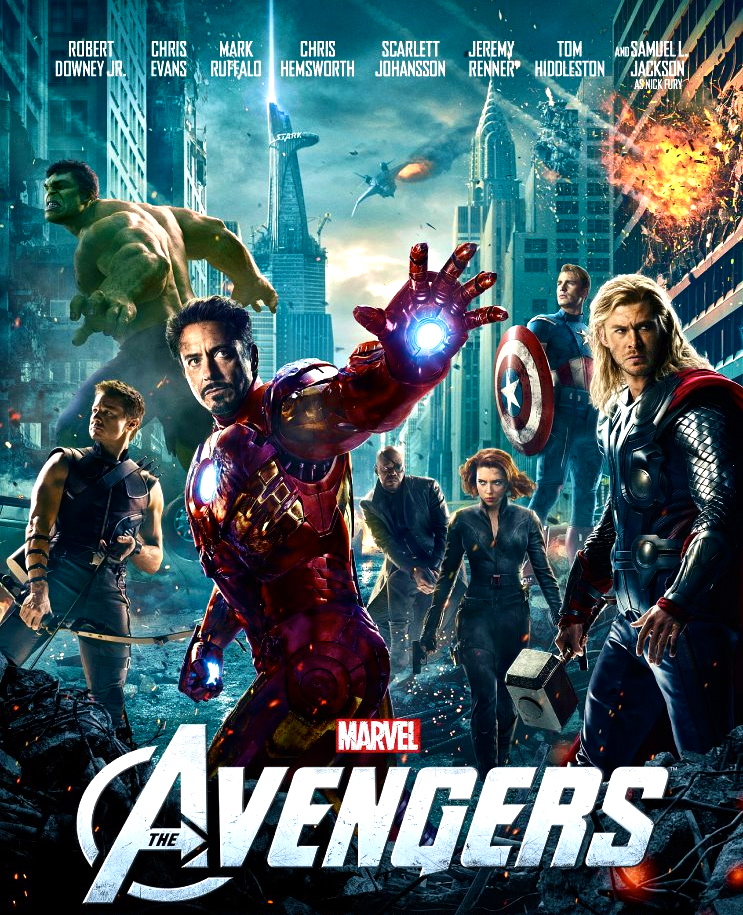
Movie review: "The Avengers"

This weekend my girlfriend and I went to movies to watch "The Avengers". Not her first choice, but neither she was really against it. I intentionally did not want to go last weekend, hoping to avoid the biggest crowds. In the end, we were both satisfied. I have been following "The Avengers" hype for some time, although passively - I like super-hero franchises, but I am not really a fan. So I knew what to expect of the movie and it turned out I was pretty realistic in my expectations.


"The Avengers" is a movie that combines and continues several movies starring super-heroes: Iron-Man (watched both and liked), Thor (watched and liked), Captain America (didn't watch, heard it was not good), Hulk (didn't watch) and Black Widows and Hawkeye (don't have movies). It also features the agency S.H.I.E.L.D., which was mentioned and played parts in mentioned movies. The plot is pretty simple: S.H.I.E.L.D. has been tampering with some alien artifact called Teserakt and accidentally freed Loki (a villain from "Thor" movie), with a little bit of help from his new allies, Chitauri. He steals the Teserakt, abducts some scientist and agents and escapes in unknown direction with nothing good on his mind. In reaction, S.H.I.E.L.D. gathers restarts the Avengers initiative, which has a goal of centering all Earth's superheroes and ally them against common foe. They are later joined with Thor who comes to Earth to put his brother Loki to order. Considering their strength, the Avengers should not have any trouble defeating Loki, except two tinny problems: they have to find out what Loki's plan is, and they have to overcome their own differences (which are pretty big).

This movie takes after "Iron Man 2" in atmosphere - flashy, fast, lots of high-tech gadgets, much of ironic banter. As I said, it is not a plot-driven movie. Although it lasts more than two hours, it is all about characters, and some about the setting. This means that it is mostly oriented to those who like the franchises and will be able to disregard weak plot. To me, it also looked like they wanted to introduce the setting and prepare the field for the second Avengers movie or other connected movies. Characters were interesting enough, and humor was quite good and successful.

In my opinion, the only flaw of the movie was the weakness of the enemies. Loki was more of a daze and confuse mind-bending player, so it OK if he is physically week (even though he is a god). But I really expected much more from the Chitauri, considering how they were announced and referenced. Also, the ending reminded me much of "The Transformers 3" trailer I saw (didn't see the movie, yet).

All in all, "The Avengers" is a standard super-hero movie multiple several times (considering all the big-name super-heroes). If you like such movies, you will love it. Even if you don't, the movie has a bit of everything to offer: humor, action, Scarlett Johansson for guys, Chris Hemsworth for girls... Just don't expect some plot-heavy intelligent drama, and you will not be disappointed - because this is THE super-hero movie.

Thursday, April 5, 2012

Movie review: "The Hunger Games"

Last weekend my girlfriend and I had some plans going with another couple to movies. This friend was very hyped-up about "The Wrath of Titans" so we wanted to satisfy his wish and we complied with this choice. But when he called to say he can't go, we changed our plans and went to "The Hunger Games" instead.

This movie is not so familiar to general audience, at least here in Croatia, but I knew much because Tor.com put much attention on it. So I knew the plot in general, even few names and about the romance part, some background. Anyway, it sounded OK; except few reviews that branded it as "a new Twilight". While I don't hold any grudge toward "Twilight" series, I watched only movies and didn't find them very good. So these comparisons made be a bit suspicious toward this movie, but in the end this fear proved unnecessary.


"The Hunger Games" have quite good plot. It's SF dystopia. Some time ahead, USA ended in civil war which resulted in new oppression: the Capitol and 12 district. The capital is place of high-technology, easy living and full colors - people there live like nobility. Other districts are each poorer than previous, with District 12 being the poorest, a place of miners and poor villagers. There lives a girl in her teens, Katniss Everdeen. Every year, a festivity called the Hunger Games is held, where two people from each district, a boy and a girl, are chosen to fight to death. After Katniss' younger sister end elected, Katniss volunteers herself to replace her, alongside Peeta, who is chosen for male representative. The two of them then travel to Capitol to prepare for the fight of their lives.

Well, since this is a young adult film, you can pretty much guess the ending. But even so, this movie has enough qualities and twist to make its 2 and a half hours pass faster than expected. The dystopian part of the movie is done quite well. A bit exaggerated from the District 12 side, but it strongly expresses the difference between the classes. In district, everything is gloomy, dirty and quite, while the Capitol is full of colors, laughter and lights.

The training part was longer than I expected it to be, but this is not an objection. They used it to explain the setting in more details and they did a good job. Nothing was obviously wrong or unbelievable. I even got a wish to read the books ("The Hunger Games" trilogy) to learn more, although I don't see where I would found the time for it. And when fighting part started, it was constantly tense and full of action. Few possible ending were hinted, so you could not be sure what the final conclusion would be.

At acting part was done quite well, except one over-cried scene. There are even few stars: Woody Harrelson,   Donald Sutherland, Stanley Tucci and Lenny Kravitz. Interestingly, and I don't know whether this was intentional or not, when they put Woody Harrelson and Josh Hutcherson (plays Peeta) together first time, they had the same facial expressions that I was positive they are father and son.

I was quite interested to see how will they be able to make a main character, who is a gentle and obviously good teen girl, kill somebody without making her look bad. More so, kill somebody with such a violent weapon as bow. Although I think that their solution was at least partly a dirty trick, it was nevertheless done cleverly.

For conclusion, I can say that "The Hunger Games" were a positive surprise. An interesting and fast movie for all kind of audiences, with enough small details to interest those with higher expectations. Also, bear in mind that this is only first part in probable trilogy.

Friday, March 23, 2012

Book review: "Salute the Dark" by Adrian Tchaikovsky

Last week I finished another book in Adrian Tchaikovsky's "Shadows of the Apt" series that mashes up fantasy with steampunk, "Salute the Dark". This book was supposed to finish the first of the mini-cycles in series. Well, it does, and does it in very good and surprising way.

Minor spoilers about previous books ahead.


There are several plots here, some on large scope, and some on private, single people way. After the recovery of Shadowbox, a powerful magical item, and after all those feinting and minor skirmishes, thing have finally come to apex. Wasp Empire has finally decided to show its full muscles and large armies are coming to Lowlands to decide its fate and those of its allies. After finally succeeding in committing all those bickering city-states to common cause, Stenwold Maker doesn't have any more options, except going north to Commonweal and asking will they join the fight against Wasps. On the other side of the world, around Exalsee, Taki, Nero and Teornis will each try to do their best in rising Spiderlands against Wasp invaders. And in the center of the Lowland, Sarn and Collegium are preparing for sieges. Balkus and Parops are leading their own contingent allied with Sarn, while Salma is leading his rag-tag army in largely successful guerrilla-offensive against closing Wasp Army. Acheos has come back home, trying to find and provide help in Tharn. Che has decided to rouse Myna once again, this time with help of their new and untrustworthy ally, Major Tharlic. A bit further in the Empirse, city of Szar has already rebelled, but Totho and his mentor Drephos are coming to crush them. Tisamon, drawn to madness by pressure of his "betrayals" has decided to throw his life away, while Tynisa is trying to save him. But all their efforts will be to naught, if Uctebry the Moquito Magician succeeds in his plan and opens the Box of Shadows.

I don't know for further books, but these four books set a pattern: 1st and 3rd were slower and narrower, only introducing new places and people, while 2nd and 4th made some big developments and action. Since 5th is a start of a new cycle, I presume it will again be only introductory. But let's get back to this book. Even though it is quite short, 450 pages, it feels larger. Often important and epic events are described only off-hand and shortly, which contributed to the pace, but this worked quite well in my opinion.

One of the main topics of Tchaikovsky's books so far was the difference between new and old, usually presented through war and fighting. Inapt races are described as anachronistic, but at the same time romantic, where their way of fighting is "clean" and "honorable". The new Apt races are only interested in efficiency, so they usually got defeated badly. And now we have the new Wasp weapons of mass destruction, which are so efficient that they even freak out other Wasps.

Although I had some inkling about this being the last book of this part of the series, I was surprised how concluding and definitive this ending was. Tchaikovsky closed all plot-lines started in previous books and if he decided not to continue the series, nobody would be able to complain anything about unresolved story. Even bigger surprises were the fates of main character. So far, Tchaikovsky didn't look like a writer ready to terminate characters in such definitive way.

The only large flaw of the series is still characters that I am unable to connect to. Even after four books, I can't say I really care about their problems, pains and fates. Pity, because with this, "Shadows of the Apt" would be one of best ongoing series. Also, a touch of humor would also improve things.

Nevertheless, with "Salute the Dark" Tchaikovsy decently continued qualities he introduced in first three books: original blend of fantasy and steampunk, solid and fast story, with good characters. If you liked prequels, you will definitely love this one. And let's hope that next one, "Scarab Path" will be even better.

Saturday, March 10, 2012

Movie review: "Tinker Taylor Soldier Spy"

Last week my girlfriend and I decided to go to movies and "Tinker Taylor Soldier Spy" was the only movie with good enough description and playing at acceptable time. Garry Oldman was also one of the reasons I wanted to watch it.


The premise of the movie is very simple and straightforward: Cold War England, head-quarters of intelligence service, retired famous spy, a traitor.

This straightforwardness is at the same time the best and worst part of it. This is really a hard-core Cold War spy movie: there is not much action; characters take much time revisiting past and thinking why someone acted as he has. There is some stealing of documents, pretending that you are somebody else... If you like such movies, you will be very satisfied. But on the other hand, this is not anything more than a spy movie. In first few minutes you learn that there is a traitor, and in last few minutes you learn who it was - everything between is one curvy, but single line.

Performance of this movie is really on the top level. Member of the secret service are all a bit eccentric, so there is much humor, but it is of that quiet and intelligent type. On the other side, there are also few hard and cruel scenes, because life of a professional spy is such. Beginning of the movie is somewhat slow, where nothing happens. Gary Oldman is a main actor, but in first half hour, I don't think he says a word (although he is on screen). There are also few other famous British actor, so this part is good.

All in all, "Tinker Taylor Soldier Spy" is not a movie to be excited about (except if you are a fan), but a good enough movie for anyone.