Showing posts with label history. Show all posts

Wednesday, June 19, 2013

Book reivew: "Century of the Soldier" by Paul Kearney

Well, it is almost three weeks ago that I have read this omnibus, "Century of the Soldier", which comprises last three books from "Monarchies of God" series by Paul Kearney, but I've been too busy to make a post about it. Good think I took some notes, because I would be lost what to write.


I have read the first omnibus, "Hawkwood and the Kings" almost a year ago and had a good experience with it, which I described in the post. Again, in "Century of the Soldier", it is hard to make a short description because these are actually three books, and the last one happening almost 20 years after the middle one. But I will make a presumption that you have read the first two books. In essence, there are two main lines. In the east we have Corfe, as one main character, with bunch of other characters, fighting against the Merduks who are once again massively invading Torunna. In the West, we follow events in Henbrion, King Abeleyn's fight to reconquer his throne, helped by wizard Golophin, and return of captain Hawkwood from the far West. And the last book combines these two plots in one, where our heroes fight against the might of the Second Empire, a militaristic theocracy empowered by magic (Dweomer) and werewolves (among other things).

There are several things that differentiate this series from other. There is much sex, especially at the beginning of the first book in this omnibus. Even though I remember some of it from first omnibus, it definitely wasn't so bold. But I was much more surprised by brutal and graphical description of was violence, especially Merduk's rape and plunder through Torunna. Battle scenes are also pretty graphical. Kearney sometimes use trick Erikson often uses: talking through perspective of unimportant character that is later not even mentioned again.

I also liked how Kearney doesn't follow the tropes. We have an uncommon romance between younger man who is one of main characters, and (much) older woman. When I think about it, all love and marital relationships in these books are, well, not very healthy. There is also much of nice ambiguous morale - Golophin and others have to choose the side; Corfe and his love to his "daughter"...

Another specialty of this series is its magic system, Dweomer, but also its coexistence with gunpowder and cannons. Nothing much new compared to first two books, but this is a solid part for Kearney. This is not a classical fantasy - it is a historical fantasy but with a nice touch of magic, maybe akin to Guy Gavriel Kay's books.

What is not a solid part of Kearney is his narration, which is very sterile. In these three books I failed to make any connections to characters, so even when they make unexpected decisions (like Bardolin) or even die (and Kearney is not afraid of killing main characters, which will become more evident later), I just don't care. There was no real spark to interest me in fate of people.

I like Corfe's part in first books (there's no Hawkwood in first book), and things got pretty heated up in second book (which I like better). But pace is too fast in occasions and changes come to abrupt, which results in sudden and not-so-solid resolutions. I would have appreciated it more if the pace was consistent throughout the books.

There are very non-cheerful book - even when they are winning, our characters are not happy. Also, there is virtually no humor (except if you count Murad) and bantering between soldiers is bad (which I really take it as serious flaw).

All in all, "Monarchies of God" have some good points: interesting setting and unique magic system, realistic and gritty tone, complexity. "Century of the Soldier" has all this virtues, but I will remember it more by its flaws: not making any connection to characters and strange pace. Even though the overall impression of the series is more good than bad, I don't believe I will buy anything more by Paul Kearney - there is much more solid things out there.

Sunday, May 5, 2013

Anime review: "Hyouge Mono"

I don't really remember how or when it started, but I know that I have been eagerly waiting for this show to be subbed for months, maybe even more than a year. I always had a liking for historical-based items (be it books, movies or anime) and "Hyouge Mono" looked like one. On the other hand, I had some similar expectations from "Sengoku Basara" (which disappointed me very, very much) and even more so from "Souten Kouro" (which took a completely different direction than I expected). But "Hyouge Mono" fitted those expectations perfectly: a complex and deeply historical anime with a bunch of characters and realistic details.


"Hyouge Mono" is set on the eve of Sengoku period in Japan, starting somewhere in last years of rule of Oda Nobunaga. In the anime we follow the important events in Japan's history for next ten years, including the wars, politics and cultural life. This is seen primary from the eyes of Furuta Sasuke, who starts as a lowly vassal to Oda Nobunaga. What differentiates Furuta from bunch of other warriors and vassals is that he is actually more of an aesthete than a warrior. But to enjoy life of an aesthete, one needs to have money. Luckily for him, aesthetes, especially those interested in the way of tea, are on the rise in this time...

Sengoku period is a very turbulent time for Japan, a time of constant warring before final unification of Japan. Of course, such times gave rise to many popular warriors and leaders, like Oda Nobunaga, Toyotomi Hideyoshi and Tokugawa Ieyasu (to name the most prominent). And as such, it is a ripe pool of ideas for anime.

There are several obvious and important aspects that make this anime different from your usual one. First one is that Furuta is in no way the main character - the show doesn't actually have one. Furuta is only the means through which we follow the events, plot and other characters. He is not even an important man, especially at the beginning of the show, and he has to bend toward the will of others. In the end, he is just a conveniently placed close to important people with small influence on the events. This is a somewhat common occurrence in books (let's only mention Guy Gavriel Kay, who use it all the time), but I don't remember seeing it in anime much (maybe in few josei anime). Actually, there is even less focus of Furuta in later parts of anime.

Secondly, it cannot be said that this anime has a plot in classical sense. We are suddenly immersed in an ongoing world full of events, we follow it for some time (10 years and 39 episodes) and then we leave it without the feel on conclusion you have when some show is finished. At one time, somewhere around 25th episode, I have made a note "totally don't know where the plot is going", because I expected first part to be the introduction and second the real revelation of the story, but I was wrong.


And third, the biggest difference is the level of historical accuracy and details. In my 200+ anime that I have watched, I don't remember ever watching such anime. I can't say that I am a student of Japanese history, since most that I know about it came from common knowledge, anime, Wikipedia and articles on Internet and magazines. There is even a warning at the start of every episode that this is a work of fiction. But on the other hand, every character, important event and even things and concepts can be found on Wikipedia or other online encyclopedia. Yes, a lots of events, or better said, reasons behind events are made more dramatic or romantic (not in sense of love), but nevertheless, the amount of accurate historical details is astounding. Interesting, characters even speak with slightly archaic speech, and subtitles that I had reflected that.

Of course, the theme of anime is strange also: the Japanese tea ceremony. I never encountered this before, and I thought it to be completely fabricated. I was very surprised when I went to Wikipedia and found out that it isn't. This gives the anime a somewhat slow and serious, but at the same time funny aspect. Furuta's tea-obsession looks ridiculous from our perspective, but I see it was a serious business at the time. There is a lot of details about tea ceremonies and talk about elegance and aesthetics. If there is a message that this anime wants to convey, then it is something like: "Always do your best in everything, but never fret about it - be elegant and relaxed". This is evident for Furuta's character that is, as I said, obsessed, pretentious and overeager to become famous as aesthete, even contrary to his sincere liking of the way of tea. Later he grows much and becomes more relaxed and enjoys the tea and beauty for itself.

This brings us to another topic: characters. There is really a bunch of them and it takes time to become familiar with them (especially since lot of them change - this is war, after all). It helps if you are familiar with the Sengoku period. They change appearance, clothes, hairstyles. But more important, they really change during the anime. Furuta, Rikyu, Hashiba - at the end, they are very different people from those who they were when we met them. I even like them more in the second part of the show, when they are more mature and relaxed...


Even though "Hyouge Mono" is a serious and historical anime, there is really a lot of humor. A lots of it steam from Furuta's obsession for art pieces, and the faces he makes (I was delightful to see that Troll-face in episode 16, during the shrimp-mongering dance). Also, it is funny when someone pricks his bubble of self-importance. But it is interesting that there is some humor that is not intended toward viewer (so that we laugh at characters), but it is more the humor between the characters so the viewer can laugh with them (like when Furuta steals the tea-jar lid). On the other hand, it is easily to forget that this funny little man is actually a warrior and veteran but we are reminded of that on few occasions.

The ending was really something. It was a slow rise during few episodes to a glorious culmination - a powerful and emotional ending. It was delighted to see that mange that anime is based upon is still ongoing - which means I can hope for eventual sequel.

I was a bit disappointed by Date Masamune's appearance and mannerism, who looks like he escaped from "Sengoku Basara". On the other hand, he was very funny, and in the end did fit with the rest of characters.

Animation and colors in nothing over the top, but it is very good. Design of characters and care for details (I mention clothes and hairstyles) are on the other hand superb. As is the voice-acting.

It's been a long time since I gave some anime 10 on AniDB (I gave them all around when I was younger), but "Hyouge Mono" definitely deserves it: complex and detailed, historically based with realistic characters, no good guys, no main character, almost a slice-of-life in turbulent times - this really an unique seinen anime. Unfortunately, I don't think it will be deservedly appreciated because it will be too hard for majority of viewers. But if you consider yourself a fan of seinen or historical anime, give this a try.

Sunday, March 3, 2013

Movie review: "Anna Karenina"

Yesterday I went to movies with my girlfriend to watch "Anna Karenina". It was originally her idea, but I didn't have anything against it.

Even though I was a passionate reader since I was ten, for some reason I (successfully) avoided most of high-school proscribed reading, including "Anna Karenina". I was vaguely familiar with the story, as much as I remembered from a book with short analysis of plot and characters for high-school books, but in general, I didn't know anything about the movie.


The story of "Anna Karenina" is a tragedy, revolving about three central characters in 19th century Russia. Karenin (played by Jude Law) is a high-positioned noble and politician, orthodox, strict but respected for his moral and ethical principles - but at the same time he is shown as cold and distanced, especially toward his family. Anna (Keira Knightley) is his wife, at the beginning of the movie displayed as happy with his marriage and especially their son, and loyal to her husband. She actually reprehends her cousin for being angry at her husband for cheating on her and manipulates her into forgiving him. But this changes after a chance encounter with young and dashing Count Vronsky - a pampered noble with eye for beauty, sweet tongue and flowery manners. An unexpected happens and these two unlikely people fall in love, and later to obsession, which damages their lives and especially Karenin family. There is also a secondary story, dealing with another young and shy noble Levin and his love toward Princess Kitty.

The story is good, but center of this movie is its characters, primary the central trio. As I expected from a renowned literary classic, characters are great and complex. The best notion for me is that no one is described as negative: all three are just people, with their personalities, caught in facts of life, love and passion. Though, I was surprised that at the end I was putting most blame on Anna - I don't know if this was intended by the movie-makers, or it was projected from my own beliefs and personality. I am even tempted to read the book to find out.

I liked the acting, even though I am not fan of Keira Knightley. But even more I liked the semi-breaking of the fifth wall: during the changes of scenes, characters are shown as traveling through theater sets; when important things are happening, supporting characters "freeze". I also liked the costumes and small details about Imperial Russia. The music was very good, even to me who usually don't notice such things.

All in all, I really enjoyed "Anna Karenina". If you don't like romances or dramas, avoid this movie. But for everybody else, the movie is never boring, has great and interesting characters and is very intense.

Tuesday, December 25, 2012

Movie review: "The Hobbit: An Unexpected Journey"

This weekend I went to watch "The Hobbit: An Unexpected Journey" with my girlfriend. I must say that I missed all the hype about this movie. I was almost unaware of it until it was out, and even then didn't paid more attention to it. On the other hand, in some ways I considered it as given that I will go to watch it. But in this way I was very pleasantly surprised.


For those few who don't know anything about the movie, "The Hobbit" trilogy ("The Unexpected Journey", "The Desolation of Smaug", and "There and Back Again") tells a story before "The Lord of the Rings" trilogy. Bilbo Baggins is a young hobbit, living a peaceful and prosperous life. So prosperous that he becomes stale and priggish for his years (60, the middle years for a hobbit). Suddenly his everyday life gets abruptly interrupted by wizard Gandalf and 13 uncouth dwarves. The dwarves are set on journey to free their homeland (the Lonely Mountain) from dragon Smaug, who took it over from them some long years ago. They are in a need of a professional burglar, and Gandalf has chosen Bilbo, who is far away from being burglar as is possible to be. After some convincing and some songs, Bilbo is convinced and their start their journey, where they are awaited by many adventures...

This last sentence sums this movie pretty well. Contrary to LotR trilogy, which was a big epic fantasy, "The Hobbit" is an obvious light adventure fantasy. There is a big goal in future (killing a dragon), but we don't even see the dragon in this movie. Instead, our heroes go on a journey, find some clues and build up for larger adventures. It is really a classical fantasy, which I don't mean in any diminutive way, because I really enjoyed the movie. There is also some history in it (of the Tolkien's imaginary world Middle-earth) and some explanations that help to put this movie in context of LotR. At the same time, they give it hidden epic proportions, if you are familiar to LotR.

For the hard-core fans of the books, "The Hobbit" will be a thrill. I haven't read the book in some time (ten years or more), but I have read it a lot of times before, and I think that it follows the book surprisingly truthfully. I can list only two real changes from the books: Azog and Radagast. And even these are based on the book and fit in the spirit of the movie. All other changes are minor, like the meeting of the White Council (which happened off-screen in the book), or history tales (that are actually part of the LotR appendix). But considering all, "The Hobbit" follows its literary counterpart more truthfully than it was the case with the LotR. At least for this first movie; we will see when next two come out...

There is one thing that will maybe bother some viewers, especially the stiff ones: Radagast the Brown. And his rabbits. It is obviously put here for the kids. But I found it quite funny actually, and I think that it was fitting for this kind of movie. If someone tried to put something like this in LotR trilogy, it wouldn't fit so well (even though that LotR books have Tom Bombadil), but here it felt almost natural.

I haven't watched many 3D movies (I tend to avoid them), but "The Hobbit" was the first movie to impress me. Few times I actually flinched. I was also impressed how they made stone-giants and goblins, even better that I imagined them. Production of the movie was really on high level.

In the end, "The Hobbit: An Unexpected Journey" was a great movie, both for fans and non-fans. It is thrilling, funny and interesting through all two and a half hour of movie. I can't wait for the next two movies ("The Desolation of Smaug" and "There and Back Again") to come out.

Thursday, August 16, 2012

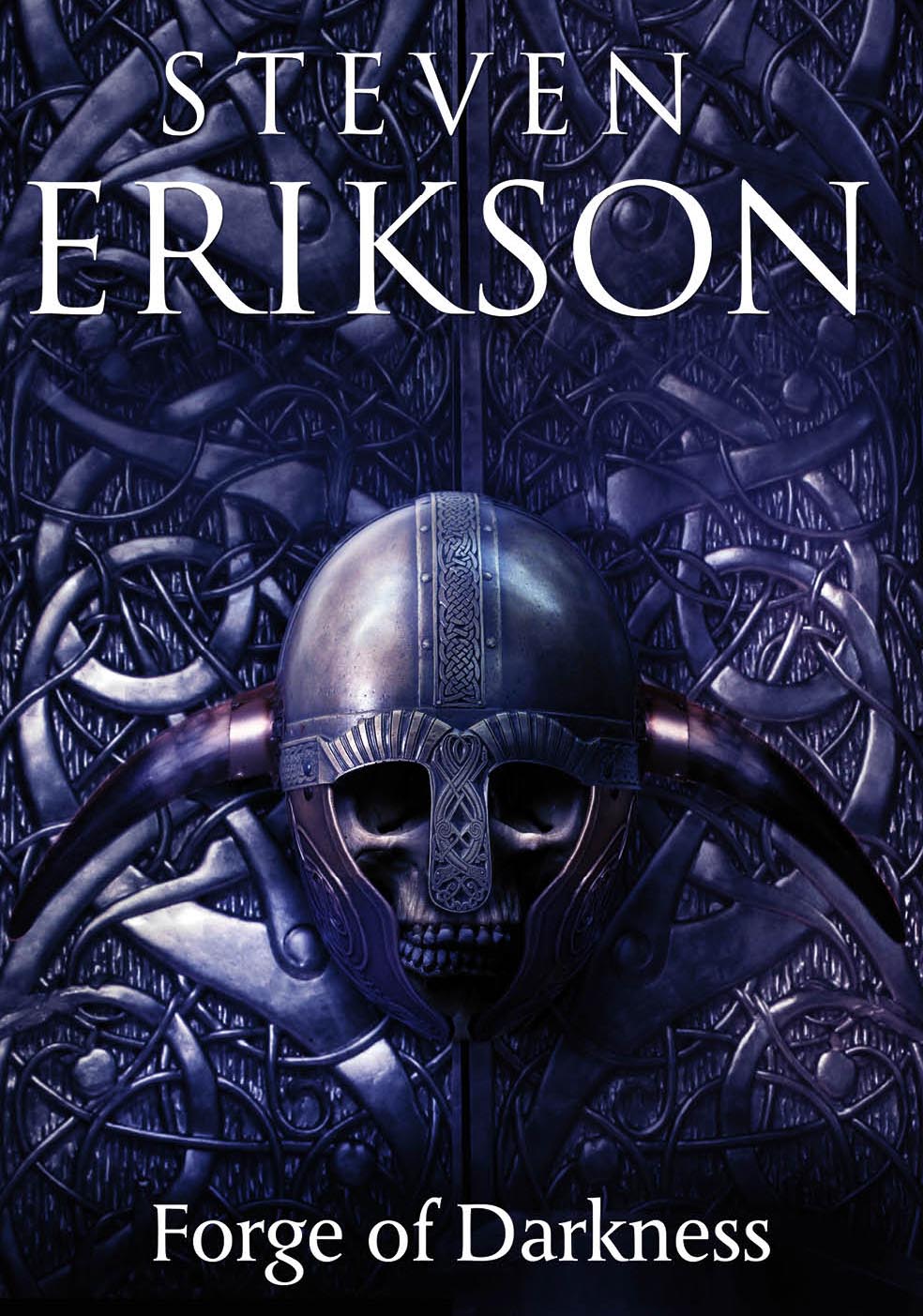
Book review: "Forge of Darkness" by Steven Erikson

This was a bit unexpected, but after reading first two chapters of "Forge of Darkness" on Tor.com (link), I just couldn't stop myself and I had to buy the book immediately. I am more of "what is done, is done" type of person and I don't like milking of a dead cow by inventing endless sequels and prequels. But "Malazan Book of the Fallen" is one of my favorite series so far (I hate saying something is best or number one, but if someone would put a gun to my head and asked me what my best series is, I would squeak out "MBotF") and I have something of respect and belief in Steven Erikson that whatever he writes, he will give the utmost of himself. Curiously, I have these same feelings for Guy Gavriel Kay's books - although I didn't like all his books, I will read any new one he writes. But anyway, I expected "Forge of Darkness" to be something of a classical prequel, explaining something already know, but in more details. Instead, we got a new series capable of rivaling even MBotF, if they weren't so intertwined.


First I would like to say that "Forge of Darkness" can be read without knowing anything about "Malazan Book of the Fallen". FoD actually has a softer introduction to this setting than it was "Gardens of the Moon". A new reader starting with GotM will be confused for most of the book, with abundance of details about characters, mythology, world and especially magic. A new reader starting with FoD will found an unique setting focused on characters and social relationships - only later will all the strangeness and uniqueness of this setting come knocking (or better said, banging) on the door.

So, to a newcomer, the plot will sound something like this: several years have passed since the wars that were imposed on Tiste people and they had enjoyed the peace and prosperity. But new troubles are brewing. Soldiers, who have given so much of their lives and futures, feel neglected and ungratefully pushed aside now that the wars are over. Ruler of Tiste, Mother Darkness has recently reached to the godhood, and this helped to unite the most of Tiste in common faith. But her stubborn insisting on keeping her Consort Draconus at her side has served to make the nobility resentful toward him. Some elements of the army recognized this as opportunity to sow turmoil and restore their own importance, but all their plans will be revered by sudden emergence of some entity from sea of Vitr on the North.

For the fans, it enough to just list a few name from Dramatis Personae: Anomander, Silchas Ruin, Andarist, Draconus, Osserc, Caladan Brood, Kilmandaros, Hood, Gothos... But don't expect this book to be full of fanservice details and treats. These characters where mysterious in MBotF, they stay mysterious here, and I don't expect you fill find much revelations about them in subsequent parts. But this is all right, because this mystery is a necessary part of them. There is a lot of new characters, and you will follow this book through their eyes and their wonder. Even though some details can be seen as contradictory compared to MBotF, they are not, really - a lot of history is changed in 300000 years. Also, Erikson never really skirted from concept of unreliable narrator. So, to me, everything here seamed plausible, convincing and consistent - feel free to think otherwise. Imagine reading MBotF after this - it has become a series to read at least thrice: first time, a reread to defeat the confusion, and then reread after "Forge of Darkness", when everything you thought you knew is set upside down (well, not everything, not even much; but this book put some characters in completely different light).

Even though he said here that "Kharkanas Trilogy" will be different from "Malazan Book of the Fallen", and be more of a traditional fantasy, this is the usual Erikson. As I said, introduction is a bit softer for the new readers - at least the first quarter of the book. But ultimately, this book proves as a much more brutal start of the series than it was Gardens of the Moon, reminding me more of the later books in the series, as "The Reaper's Gale" or "Toll the Hounds". There is a surprising amount of sexual violence in later parts of the book, and they are very explicit - didn't expect it. Sure, there was rape and torture before (e.g. "Reaper's Gale"), but not like this. Erikson is not easy to its readers; at the contrary, he makes them go through some hard experiences. As can be expected, there is a lot of tragedy - even thought I knew from MBotF about some endings, I still hoped they will not realize. And I must admit that the last POV in this book made me shed a tear.

On the happier side, I can testify that Jaghut are funny as ever. Writing is beautiful, but I expect that lots of newcomers will be rejected with typical Erikson's monologs about philosophy. This is one thing in which "Gardens of the Moon" proves to be easier for the new readers, as it consist mostly of action - this side of "Forge of Darkness" is more similar to "Toll the Hounds" and later books.

For the conclusion, I want to say that with "Forge of Darkness" Steven Erikson succeeded in making a new series great as "Malazan Book of the Fallen" in quality, but different in its substance. It definitely deserves a recommendation for all fans - but expect a new and independent series and be ready to be swept of your feet. As for the unfamiliar readers, if you expect more from your fantasy than action, and like gray morality and hard questions, give this book a try.

Tuesday, April 10, 2012

ASoIaF reread: "A Game of Thrones" and "A Clash of Kings"

Although initially I planned to write a particular post for each of the books, I later changed my mind and combined it to one, simply because I didn't have much to say. I am continuing with my reread, so I will see whether "A Storm of Swords" and "A Feast for Crows" will be put in separate posts. "A Dance with Dragons" surely will be.

I don't plan to write in much detail about these books. Since there is ASoIaF madness going around, anybody who wants to find out what is going on in these books can do it without much hassle. Although, anything less than reading a book will result in only a partial experience. I have watched the first season of TV adaptation, "Game of Thrones", and although it follows the series pretty much correctly, it still cannot incorporate all the little details that make ASoIaF what it is. This is another reason why I won't write a short synopsis: every description would fail in catching a myriad of small details that makes this a series with one of the most complex plots available, with a matching cast of characters. Let's just say that "A Song of Ice and Fire" is a epic fantasy series, set in a very complex quasi-medieval and fantasy world (but one with very sparse use of magic), with a large case of complex and deep characters and without clear distinction between good and evil.


I really don't have much to say about the first book, "A Game of Thrones". It was not really a thrilling experience and I was glad to finish it. This is not a berating - aGoT is still one of best fantasy books I read, belonging to one of three my best series ever (along "The Wheel of Time" and "Malazan Book of the Fallen"). But I have read it at last half a dozen times, although not in last few years. Nevertheless, I pretty much remember everything from it. But more so, last year I read a Leigh Butler's ASoIaF reread on Tor.com, which is pretty detailed and would make me remember details even if I forgot them. And on top of that, I watched the first season of series recently. So you can imagine my lack of enthusiasm...


With "A Clash of Kings", things fared much better. Even though Leigh has gotten into reread of aCoK, she did less than half of it. A TV shows has only recently started showing, so I had a much better reading experience with it. But in the bottom, there is not much difference with these two books. Maybe it can be said that grayness of characters come to fore; also, the fact that you should not make an emotional attachment to characters. But maybe this comes from me knowing what will happen later.

This was the first time I read these books in original language they were written. Martin is quite a good writer, who can go into details deep as he wants (e.g. food) without ever getting boring. I don't know whether I knew this before and forgotten it, or is this the first time I realized it, but chapters in these two books are set strictly in time line. Meaning, events in any chapter happened later than those in chapter before (with one small possible exception toward the end).

Well, this is all I wanted to say about these two books. Now, I am getting onward with "A Storm of Swords".

Tuesday, January 24, 2012

TV show review: "The Pillars of the Earth"

I started watching this series with my girlfriend sometime in December, after we finished watching "Game of Thrones". I heard few people talking about it (it was also going on TV around that time) and then remembered reading about the book somewhere, so I thought it will be a good watch.


"The Pillars of the Earth" is an 8-episode historical TV-show with a story set in 12th century England. As it covers a period of couple of decades there is a lot of going around. On highest scale we follow the war between cousins, after King Stephen takes the throne from rightful Queen Maude. But the focus is put on a town of Kingsbridge and its residents: Prior Phillip, an ambitious but extremely pious and moral man; Tom Builder, a master builder whose dream is to build a cathedral; his son Alfred and talented foster-son Jack. Their plans to build a cathedral in Kingsbridge will be a thorn in the eye for corrupted Bishop Waleran and wicked family Hamleigh, which stole the neighboring Shiring Castle from its rightful owners, young Aliena and Richard. In the background of all this events is the story of Jack Shareburg, a mysterious man who was killed for witnessing a sinking of the White Ship which carried England's original Crown-Prince.

Plot is not bad as it is, but it is pretty much predictable and full of tropes. I presume that it worked much better in the book where it could be developed in more details, but here, more experienced viewers will able to guess immediate events without much trouble. But if you like history you will probably find it interesting. It is gritty and violent, with lots of fights and scheming.

Characters are much better, although they also suffer from the same problem - they had to be simplified to fit the frame of the show. But they are complex enough and should be able to pique your interest. This is especially true for Bishop Waleran and Prior Phillip, who are probably two most complex characters in the series. The Hamleighs will also be able to provide you with some shock. Most of the "good" characters behave as you would expect from them, but the "bad" ones will be there to make things interesting.

The production of this series is a minus for it. Much, much weaker than "Game of Thrones" (comparing these two is maybe unfair from me, but I have watched them one after another). Locations and people are quite limited. Mass battles are anything but. The cast is pretty good and well known, though. No one is a big star, of course, but even I was able to recognize a lot of faces, if not names.

Taking all this in consideration, "The Pillars of the Earth" is nice enough historical series, although I would not recommend it to anybody. This is a series for lazy Sundays, if you don't have anything better to watch.

Thursday, January 5, 2012

Anime review: "Souten Kouro"

I was finally able to watch "Souten Kouro"! This anime came out more than two years ago - almost three now - but it wasn't until recently subbed by any group. The reason stated for this by any group that tried tackling it was that the anime was too complex and had too many characters. Considering this and the comments on AniDB, which were all praising, I was pretty much heated up for this show. After watching it, I now see I was misled by these comments, but also that this is a very good anime.


"Souten Kouro" is an adaptation of the manga with same name. Mange, in turn, is based on Chinese historical period called Three Kingdoms and 14th century novel "Romance of the Three Kingdoms". It is set in the end of third century, when China was a place of great turmoil - a land of heroes, violence and great armies. This story is presented with Cao Cao (famous Chinese warlord and statesman) as a central character. Cao Cao was in history depicted as a cruel, but efficient governor, but this anime tries to put his character in context of this violent times and events and pictures him as more humane and benevolent person.

First, although it is hard to see it as such at the beginning, this is a pretty much accurate historical adaptation. It has a really big number of characters, and most of them are present in only episode or two. Since story in this show lasts some 40 years, and characters change much in appearance and clothing, it is sometimes hard to follow who is who. I tried putting few names in Wikipedia and got results for all - quite big articles with description of event from this anime! So if you like historical stories, this this is your show.

My biggest problem with it is the form this story is presented. This combination of real-life characters and complex story is displayed as shounen battle anime - main characters are twice in size as normal persons, and when they go to battle they scream a lot and singlehandedly kill hundreds of soldiers. Well, it would be unfair and untrue to tell this show is only a battle anime. No, this is only one small part of it - but it almost ruined it for me. This is mostly true for first 5 or so episodes, where early years of Cao Cao's life are depicted - he kills bandits, falls in love with foreign beauties, outsmarts Chief Eunuchs, and so. This part is so similar in spirit to "Sengoku Basara" (which I hated) that I almost stopped watching. This would be a pity because story power up later, but I would be happier if they made this beginning more historical than action show.

This problem is especially present whenever Lu Bu appears. He is also a historical person and in "Romance of the Three Kingdoms" is presented as Chinese mightiest warrior. This mean that in this show he is pictured as 10-foot muscled giant with dreadlocks, who rarely speaks and whenever goes to battle (and this is often) sound a very irritating battle cry (I fail with every try of describing it; you just have to hear it), jumps ten-stories high and kills hundreds of people. On the other hand, he IS a very important part of the story and has some good drama centered around him.

Cao Cao was also very irritating at the beginning - he stands perfectly erect, tall and speaks in proclamations. But later, as he gets older, he really grows into his act and feels very natural. I must say I really liked his character - he has done some wicked but cool stuff.

Another objection, although smaller one, is that anime ends abruptly. We have some really big battles happening, when suddenly at the end of one we got letters "And so he continued to fight until becoming greatest hero ever..." (I made up this sentence, but something like that) and this is it. And at this time I really started to like this show.

Animation and visual aspects of "Souten Kouro" are also something special. Although it has lots of bad CGI effects and computer-generated faces that move like from old video-games, when important characters come to fore they are done superbly. E.g. you can see how gradually Cao Cao and rest grow beards as they become older - they really took care of details. Opening is good, ending not so, but nothing out of the ordinary. Voices are done very good (except that Lu Bu!), other sounds also. Anime has 26 episodes.

As this is accurate historical anime, you can expect some really brutal and violent action. Cao Cao was respected and also had some bad and cruel reputation. On the other hand, expect some good and sharp humor.

So, despite some flaws (too much feel of battle action anime), "Souten Kouro" is pretty good historical anime. It has great complex story and really good and big cast, so it is sometimes hard to follow, but if you are into history, this is definitely a show for you.

Thursday, December 15, 2011

Anime review: "Samurai Champloo"

This is my second time watching "Samurai Champloo" - first time was at January 2008, short time after I started watching anime. At that time it was one of best anime I watched, and in my mind stayed that even after I watched many times more shows. I didn't have any plans to watch it again, but I didn't have idea what to watch so I decided to remind myself of its greatness.


What I didn't know at the time of my first watching, "Samurai Champloo" was made by the same guy who made "Cowboy Bebop": Watanabe Shinichiro. These two anime share much in common - mixture of genres, stress on music, humor, even design of characters. For SC, this mixture is a blending of samurai anime with slapstick comedy and history. Anime follows a journey of three main characters. Fuu is a teenage girl whose mother recently died, and after losing everything in fire (caused by two other main characters), she decided to start looking for her father, "samurai who smells on sunflowers". Jin is a young ronin, silent, careful and emaciate - we don't learn much about his past until later in show. Mugen is Jin's complete opposite - loud, flamboyant and a criminal. What they two have in common is their unmatched skill with swords and the fact that they are running from world. So without anything better to do with themselves (and with some blackmail from Fuu), they will join Fuu in search for the mysterious samurai.

This main plot actually doesn't have much importance until last three episodes (out of 26). Anime comprises of mostly unconnected episodes following the trio traveling over Edo Japan. Adventures they fall into are based either on real historic events or popular myths of that time, but colored in anime's original and extreme nature. For example, we have a story about popularization of ukiyo-e paintings in which Ukiyo-e is only a pretense for getting young girls kidnapped and sold to sexual slavery. Several of the episodes reveal more of character's past, but we never actually learn exactly what happened to them to end as they are. Anime is mostly light in tone and in bigger part consist of humorous scenes, but in several instances get very emotional and strong (in sense of shounen anime).

I must admit that I didn't like "Samurai Champloo" this time as I expected, contrary to "Baccano!" which I adored even more the second time. Don't get me wrong, I still think it is a great anime, but it didn't give me as much laugh as first time. The problem may be that it had a big impact on me so I remembered all the best scenes very clearly, so they didn't surprised me as at first watch. Also, maybe I expected too much.

Colors and animation is what you would expect from an older anime (2005), but design of characters is still over-the-top. The same can be said for music, which consist mostly of hip-hop. There is also one great Japanese old country song in episode 13 (or 14).

Still, "Samurai Champloo" is one great anime, a one of the masterpieces of famous director. Although maybe not appropriate for novice anime fans, I think this is one of anime everybody should watch eventually.

Monday, November 21, 2011

Book review: "Under Heaven" by Guy Gavriel Kay

I haven't read Guy Gavriel Kay for several years now, since I singed out of library. Before, I used to re-read one of his books every few months, resulting in reading his opus (6 books in library) every couple of years. You can say that he is one of my favorite writers, although I don't count him in Big n (n being 3, 5 or some similar number of favorite writers) for simple reason of him not writing long epic series. He recently (last year) published another of his novels (he published some urban fantasy novel and a collection of poetry, but I don't like urban fantasy and can't read poetry, so I don't count them) and I was somewhat unsatisfied because buying it didn't fit in my schedule. But my local bookstore has a promotional month(s) when you get three books for two, so I decided to treat myself with this.

Although Kay dislikes branding of his books as "historical fantasy", I don't know how else this should be labeled. I allow that it is mostly historical fiction, but there is a touch of fantasy and for me this is a definition of historical fantasy. This is true for this "Under Heaven", too. Actually, "Under Heaven" is a typical Kay book. We have a historical setting and real historic event as theme (An Shi Rebellion, which I didn't know first thing about). We have larger-than-life characters (most of them male, but females are in no way withhold), with unreal levels of honor, cunning and passion that feel real nevertheless. We have a meandering story, with lots of jumps in time and space, short POVs from characters that will never be seen again, changes between POV and narration types. And at last, we have a main character who is a smart and able guy, suddenly finding himself in highest circles (royalty) where he feels inadequate, but actually acts marvelously and then ends removed from important events and future.


In "Under Heaven" this is Shen Tai, second son of famous, now passed away, General Shen Gao. Since their customs obligate sons to mourn their father for two years (except if they are members of army), Shen has chosen something unorthodox (but not forbidden): to spend next two years in isolation, burying the bones of soldiers fallen at Kuala Nor (site of many battles between Kitai and Tagur). Shen's intentions were sincere and innocent, but his actions have now attracted the attention of royalty: one of wives of Taguran Emperor, daughter of Emperor of Kitai, has given him an extravagant gift of 200 Sardian horses (equivalent of Bill Gates giving you 100 million dollars - not big money for him, but you are suddenly in everyone's focus). Now Tai has to find a way of dealing with horses without shaming his family or offending the Emperor or anybody powerful, avoiding machinations of his ambitious brother and enmity of First Minister (whose newest concubine was once Tai's favorite courtesan) - all this in rigid and custom-obsessed society on a brink of rebellion... Of course, this is not all, but if this is not enough to attract you, nothing more will.

As I said, this is a typical book for Kay. We are following one important, but not the most important, character during turbulent times, based on some historical epoch. In this case this is 8th century China: not my favorite history topic, nor one I know much about. Since I don't know much about it, I have to trust that Kay was not making all this up; based on his previous book, I think the setting was truthful as much as possible. The same cannot be said for his characters: they are always too ideal, whether as good or as bad guys. But this make them fun to read about. His storytelling is also specific: a chapter starts with present events, then we a transfer to completely (seemingly) irrelevant time or POV and then this two lines connect. But he does it so good that it feels natural and simple.

About this book particularly: I liked most of the book, but ending was a bit rushed. His books are not usually overly long (relatively), but I think this was a shorter one (560 pages). He does a great beginning: introduction to setting and characters, acceleration of main plot. But then things end too fast. I can't say that ending is unsatisfactory or doesn't feel closed, but I think a hundred more pages of plot development would be a bad thing.

As those who have read his previous books, there are always some fantastic elements present there that don't make much worldwide impact (except in "Tigana"), but make a tremendous personal impact of main characters. It is also present here, and I must say I was surprised how direct it was.

Different people like different Kay's books. My favorite book is "The Lions of Al-Rassan", while I find his most ambitious work to be "The Sarantine Mosaic", and I also adore "Tigana". I less like "A Song for Arbonne" and "The Last Light of the Sun". For some people is the other way around. I found "Under Heaven" better than these last two, but not good as my favorite. Kay's fans will notice that I didn't mention "Fionavar Tapestry": I read only the first one ("The Summer Tree") and I hated it - I really don't connect this book to Kay.

Nonetheless, I would recommend "Under Heaven" to every Kay's fan or anybody who like historical fantasy or is a sucker for romance. Realistic setting, great characters and enjoyable plot make this a very good read!

Thursday, August 4, 2011

Book review: "The Darkness That Comes Before" by R. Scott Bakker

First I have to say I already read "The Darkness That Comes Before" and its sequel "The Warrior-Prophet" once. The books were published in Croatian and I was a member of public library at that time, so this wasn't something that I, a fantasy-fan, could miss. When third book, "The Thousandfold Thought" arrived, I wasn't a library-member anymore. Once a friend tried to borrow a book for me, but it was out at that time. And I wasn't really into buying English version of books I have already read when there are already dozes of book on my wish-list that I haven't read. But some time ago I stumbled on Wikipedia article about R. Scot Bakker and read that what I though was only a trilogy was actually a big series with some eight or nine books planned. This of course piqued my interests since these were some of the finest fantasy-books I ever read, so I decided to buy them, one at time, as time allows me.

As I said, I read this book few years ago, but only once, so this was something between read and re-read. I recognized character and events, but I didn't remember them in advance, except in most general terms.


This is a book of multiple plots, presented from sever points of view, just the kind I like. A main character, or at least the most pivotal character, is AnasĆ»rimbor Kellhus. He is something of a monk, trained in psychology, observance, physical skills... His level of skill is actually such that other people are like children to him and most consider him a more than human: he can read their though by noticing small changes at their faces, pulse rates, etc.; he can learn language only by hearing it for few days; he can catch arrows in flight. But he is not the only one; there is whole order of people like him. Thankfully for the world, they are secluded and never go out of their fortress at North. But that has changed when thirty years ago AnasĆ»rimbor MoĆ«nghus, Kellhus' father, got corrupted and left them. But now, he is back, at least in their dreams, commanding them to send his son to him, to Shimeh. Kellhus is now sent to journey to find his father, find him and kill him.

It is important to note that Kellhus' order has been isolated from the world for two thousand years, so he knows nothing about it. Two thousand years ago a First Apocalypse occurred: No-God tried and almost managed to destroy humanity. Not much about this is revealed, only few facts that rise more questions (in best Erikson's style). Whatever did happen, things have changed much since Kellhus' ancestor for ruler of largest human Empire of the time. Humanity is now centered on Three Seas, where they have forgot about No-God and turned to their petty human squabbles. Few of those who remember and who are always vigilant about the Consult, whose focus is the return of No-God, the Second Apocalypse and they are the members of Mandate School of sorcery. But since no one seen or heard about Consult, there are not many who believe them. One of their members is Drusas Achamian, sometimes a teacher to kings, but most often a spy in lowest quarters of Three Seas. He is sent to investigate what will Maithanet, new Shirah of the Thousand Temples (absolute religious leader of larger faith) pronounce as a target of newly proclaimed Holy War: sorceress that Faith sees as blasphemers and rivals in power, or Fanims, southern infidels that have occupied their holy city Shimeh...

It would take me to much too describe every faction, plot and important character in details, so I will just number few of them. We have Emperor Ikurei Xerius III and his nephew Conphas who are trying to restore their Empire to former glory, not shirking even from using Holy War for their purposes. There are Crimison Spires, a most powerful school of sorcery, having their own private war with the infidels. There is Cnaiür, a chieftain of Scylvendy, a warlike human race, who is shunned by other chieftains because of helping a persuasive stranger to kill his own father thirty years ago. Then there are the Fanims and their own powerful school of sorcery, Chishaurim, different from any other. There are rulers of small and large kingdoms of Three Seas, and there are small, regular people. And finally, there is the Consult, who is not so dormant as everybody believes...

In many ways, "The Darkness That Comes Before" presents the very best what fantasy can offer now. It is a beginning of long epic fantasy series, but in doesn't follow the usual tropes. Main characters are not teens or young people with no experience going out in the world for first time; here we have people in their middle years, with much experience and much going on already. We have a great worldbuilding and very imaginative setting. World here has a very rich history and detailed background, but most of it is only suggested, not openly revealed (as I said before, in style of Steven Erikson). Characters are not black-and-white and definitely not shallow: they have their own agenda, own morality, doubts, little flaws. Plot is very complex, with many subplots and small sidetracks, but it is still enjoyable, believable and easy to follow.

There is not one thing I could object about his book. Unfortunately, it lack some small detail that would make it universally loved, like ASoIaF, WoT or MBotF. When I say universally loved, I don't mean that everybody likes it; but there are lots and lots of people who like it, and even those who don't know about it and it can always be a topic of heated discussion between fans and dislikers.

Nevertheless, "The Darkness That Comes Before" (and I hope its sequels) is a great book, with great content and great style. I would recommend it to everybody who likes high and epic fantasy and is not afraid of ambitious books.

Friday, July 29, 2011

Anime review: "Fullmetal Alchemist: Brotherhood"

It turned out this was one more of my false predictions, but I am very satisfied with it, because this version of "Fullmetal Alchemist" is one of the best anime I have stumbled on so . Definitely among first ten, at least!

Original FMA was one of the first anime I watched. It was impossible to avoid it at that time. Wherever I looked for recommendations, it was somewhere at the top. Also, comments were full of people discussing whether it was the best or only good. So I of course had to watch it. I quite liked it but I was one the side of those who deemed it only very good. It had some nice premise, good characters and was quite fun, but at that time I was watching only the greatest hits of that time ("Ghost in the Shell", "Berserk", "Cowboy Bebop", "Elfen Lied", "Claymore"...), it some somehow drowned in the mass of other good or great anime. I watched it, marked it as fine and moved on to another stuff completely releasing it out of my mind.

So, when couple of years ago they started releasing FMA:B, which was some alternate version of the same anime (or better said, different adaptation of the same manga) I wasn't exactly thrilled. My thoughts were somewhere on this track: "Oh no, another attempt to suck money with unoriginal idea. They probably just remastered old episodes, added some fillers and now are trying to sell it to new kids who were too young to watch the original". You know, the arrogant mindset of self-proclaimed connoisseur. Normally, I immediately decided not to watch it, since there are better, original anime for me to "waste" my time on.

But then I saw it won a really big bunch of awards. Also, I noticed it has a quite good rating on AniDB. Information that finally tipped me over was when I read somewhere that what I though was original FMA, was actually made much before original manga ended, so they had to make up the ending. On the other hand, FMA:B was supposed to be much closer to manga, which is always a plus in my book.

After I started watching it I was a bit disappointed because first few episodes are identical in regard to plot. Sure, animation is a bit modern and prettier, and characters looked a bit more serious and deeper, but these are not reasons good enough for me to re-watch 64 episodes. Then, were surfaced few details that confused me and made me unsure of my memory. Then, they introduced a few characters that I was pretty sure weren't present in FMA. And then, they went in completely different direction... Of course, by that time I was already hooked up and JUST COULDN'T STOP WATCHING... I think I watched some 30 episodes in two days; the rest I was forced to schedule more evenly on several more days.


"Fullmetal Alchemist: Brotherhood" features a very nicely setting. It is mostly based on first years of 20th century, somewhere around or after the First World War: guns are predominant, but soldiers still carry and use swords; there are many horses, but there are also cars. There are two distinguishing differences. The important one is the use of alchemy. It is in results similar to magic, but it is also based on science, it has many restrictions and it is not so widespread. The rules are not very strictly said and one could find inconsistencies if one would like, but it is nevertheless imagined so good that you don't feel the need to dismantle it; a perfectly guessed balance. The other thing is the use of automails, artificial metal prosthetic limbs, based on steampunk or something like that. Even though the anime could work perfectly without it, and I believe a reason for introducing it were either author personal preferences or desire to comply to bigger audience, it is also very nicely imagined and fits in plot and characters quite tightly. Setting is concentrated in land of Amestris, remotely based on that time Germany: led by Fuhrer President, militaristic and expansionistic.

The story is centered on two young alchemist, brothers Edward and Alphonse (15 and 13 years old, or something like that). After death of their mother from illness, being already abandoned by their father (who is at the beginning shown only as alchemist) they perform one of the greatest taboos of alchemy (also one of the hardest feats) and try to resurrect their mother. For that, they fail and meet the Truth; they are also punished, Edward with taking of his right arm, and Alphonse by taking of his whole body. Edward manages to bring back his brothers soul and affix to an empty armor suit, but they both suffer tremendously. When army learns about their exploits, it offers Edward to become a State Alchemist. Different to regular ones, they immediately receive a rank in army equal to colonel (I think), and more importantly, they have access to funds and extensive data for research; drawback is that they can be called to duty and forced to become human weapons during the war. Because of this they are called "dogs of military".

We join the Elric brothers during they search for Philosopher stone, a mythical substance that supposedly can help alchemist to ignore the laws of alchemy (like that one against raising of the dead or one that states they you can get something only for equal amount of matter/energy). It is only expected that not everybody would use this only for good purposes. And of course, it is an old maxim that power spoils the people... Through their adventure we are introduced to the army, which plays a bit part in politics of Amestris, to other alchemist, to the big enemy and so on. Plot is not a typical one-level, straightforward shounen story. The main story-line is from Edward's and Alphone's POV, but we have a large portions told from members of the army (Roy Mustang, Armstrong siblings, King Bradley...) and even from the "evil" side. There is of course lots of action and fighting, but this is not primary an action anime. I think that equal or even more importance was given to mystery, strategy and politics. I think that FMA had much more focus on action that it is the case for FMA:B. As I said, alchemy plays a great role, but more so on highest level, as plot device (ultimate ritual, sacrifice, etc.) that in everyday happenings. I think that there are lots of episode where alchemy doesn't even happen, or has no influence. It can be definitely said that I liked the plot: it was complex, consistent and quite surprising. This last statement is especially true if you watched FMA before; FMA:B takes you to a completely different direction and does it so in such a great way.

Third thing why this series is so good (other being the setting and plot) are the characters. There is quite large cast, but you won't have any troubles remembering who is who (although I must admit that I didn't even tried to remember the army ranking). Every character has depth and is very believable. I must especially emphasize the fact that even though the Elric brothers are main characters, not everything revolves around them. Other characters interact with them, but they also have their own agendas and don't wait for them at all. Also, not every other character's action is caused by them. For example, Roy Mustang (who is let's say in charge of Elric Brothers) actually interact with them only minimally in the run of show; he has its own plans and even though is willing to use them when they are available, you get the feeling that he would do thing even without them. All characters grow during the running of the show, which is always great. Especial compliments should go to the bad guys. They are pictured as regular flat bad-guys early at the beginning, but we spend much time with them and realize there is much more to them than only bluster and "evil". The destiny of Envy (one of most important bad guys) was one of the most emotional parts of whole series. They are also quite well and originally designed.

I could continue with complimenting it much longer, but I've been trying to give everything an objective review, so I should always mention flaws. Thankfully, there are no major ones, only a few minor. In my opinion, second part of the anime is a bit rushed. I haven't read manga so I don't know how closely did anime follow it (I read somewhere that it is very close), but I believe that additional 10 episodes would even more increase its quality. This is indirect praise, because it is not often that some anime can keep the same level of intrigue and interest for 64 episodes! Also, although I noticed it only later, in some episodes that ending song didn't mean that episode was finished so I missed some material (not much, but sometimes important). I also noticed that the author made all his female characters pretty and well endowed. It is not a real objection, just a remark that even with such a good anime the author or production staff felt they need additional (cheap) tricks to win audience.

Since I recently watched last episode of Harry Potter, I noticed several similar between these two. They are both pieces intended primary for younger audience, but enjoyable by adults with no problems. Harry Potter has magic, Fullmetal Alchemist has alchemy. Both have a large cast, and so on. Privately, I think that FMA:B is better that HP and I hope it will be at least as successful in anime as HP was in movies and books.

Well, to finish this review, I can only say that you should watch this great anime. Sure, there will be those who won't like it. There was an interesting poll on AniDB page for "Fullmetal Alchemist: Brotherhood" with question "Best anime ever?". Although I don't believe that everybody would say yes (neither would I), but I think that majority of people would answer "No, but should be in top ten!". So watch it!

Sunday, July 10, 2011

Movie review: "X-Men: First Class"

Well, this was a hell of a week for me. I was working from dawn till evening, so I wasn't really in the mood for writing after coming home. This movie I will be reviewing, "X-Men: First Class", I watched it two weeks ago... I like X-Men franchise, although I was never a fan. I just think that setting is great. I liked all four movies before this one; I don't consider them some great masterpieces, but they were fun to watch. My opinion of the latest movie is the same.


Although it was made latest, this is a prequel. Events in it happen half a century before the events in previous movies, in sixties (although there is a short introduction happening during World War II). It deals with history of Magneto and Professor-X, two very important characters for the whole franchise. In some ways, the two of them are the founders of whole X-Men thing. Some part of this history was shown in chronological sequels (the fence scene and concentration camp), but this movie develops and explains what happened afterwards. It describes the origins of prof. Xavier and how he met Eric Lensherr and then later separated with him. Around their relationship we see the world, first organized mutants, afterward of WWII, Cuban Missile Crisis and so on. The plot itself is not something convoluted or sophisticated; it is a simple hero-movie plot. But it is very deftly done, especially the fact it is combined with real history.

The same can be said of characters: they are not deep and real-like, but they are all fun to watch. There are no big stars; most of the cast is in their twenties, but they did their job quite well. I usually don't notice how people are dressed in movies, but I really liked their clothing here. I must say that James McAvoy, who plays prof. Xavier, even remotely doesn't remind me to Patrick Stewart (older version of professor). Also, there is a very funny scene with Rade Šerbeđija, my fellow countrymen.

In short, "X-Men: First Class" is by plot and characters a typical super-hero movie that doesn't require much concentration, but it gives you much pleasure. Every part of the movie was done well and there wasn't a boring minute in it. Just don't raise your expectations too high.

Monday, July 4, 2011

Movie review: "Perfume: The Story of a Murderer"

It passed some 10 day since I watched this movie, so it's starting to get smudged in my memory. I planned to watch this movie for some time, although the reason is a bit unclear even to me. Few years ago I read a great book, "Jitterbug Perfume" by Tom Robbins. The book is fantasy-comedy-philosophy-etc mix that is very enjoyable and I would recommend it to all, especially those with great imagination. Anyway, I thought (or better to say, I hoped) that this movie has something to do with the book. It doesn't, but the movie is nevertheless worth a watch.


"Perfume: The Story of a Murderer" is a story about life of Jean-Baptiste Grenouille (played by to me unknown Ben Whishaw). At the beginning of the movie we are shown the preparations for his execution, with ragged masses of 18th century Paris screaming for his blood. Then we are flashbacked trough his life. He was born in unenviable circumstances. He lived first in orphanage and then was sold as worker in tannery. His prominent feature is his extraordinary and superior sense of smell. On the other hand, he lacks any moral or emphatic constraint and posses only basic animal instincts of survival. And his only wish if to explore new scents, whether considered good or bad. We will follow his life in this exploration and later in his search for mythical ultimate perfume (which include murder, as you can guess from the title).

First, this is very "realistic" movie. By this I mean it shows the dirty and ugly part of human life. And this life was quite ugly in 18th century. Rats, dirt, not washing, working in practical slavery, and so on. Secondly, this is very violent movie. Grenouille is not picky with means of attaining elements for his perfumes. And it looks like he carries a bad luck for anybody who associates with him. Thirdly, this is a very strange movie. Contrary to all this violence, sex and dirtiness, it is very peaceful and pastoral movie. Grenouille doesn't talk much and most of the explanations during the movie are given by narrator (voice of John Hurt). Fourthly: it is very funny movie. Grim and bizarre humor, but funny nevertheless.

We also have few stars in the movie. I recognized Alan Rickman, and now on IMDB, I found that Dustin Hoffman also has important role, although I didn't notice him. The acting is, of course, great.

"Perfume" looks to me like one of those movies you either love or hate. And I somehow think that for most people it will be the hate choice. But for those who like bizarre, history and are patient, I think this is a great movie.

Tuesday, April 19, 2011

MBotF reread: "Dust of Dreams" by Steven Erikson

OK, now we are getting somewhere. I have finally finished "Dust of Dreams" this weekend and I am currently reading "The Crippled God". After more two months of rereading... Not only that this was tiring, it is first time in my life that I have a to-read-pile! And to be worse, four books: "The Crippled God", "Way of Kings", "Empire in Black and Gold" and "The Cold Commands". I think I will need somewhere around two weeks for reading tCG and after that I am taking a brief vacation from reading... I plan to watch some anime, or something.


Now, to the book. It's kind of funny when you catch yourself thinking "What the f*** are they talking about?!?!" while reading a dialog in 9th book in series, between characters that you know for five books. It also tells something about Erikson's writing style: it doesn't spoil the readers. There is no way to completely avoid info-dumps, but he is good at masking them. There are no visible seams in his books. You also how to admire how he is able to turn everything you believe with every new book. But not just that; he succeeds in inviting a faith that he will somehow make everything believable and plausible. Currently, I don't see how he can do it in one book.  I have read one or two spoiler-free reviews where authors indicated that Erikson actually doesn't give all answers in last book, but instead continues with his usual politics: rising three questions for every answer. I have split opinion about this solution. On one side, I will be an angry little and petty fan if I don't get all the answers right now. On the other side, this has long-term advantages. With every reading or discussion about it, your view on things will be able to change and these books will stay fresh for long time. Also, this way Erikson leaves place for seamless sequels or prequels. This makes sense when you consider a fact that he announced some prequels... I see I got little off track. Message I wanted to express was, that as usual, even though in is penultimate book in series, there are no easy answers. It reveals and sketches some new characters, new concepts, new races... I really admire this and think it's very brave.

First part of book is not as usual with MBotF. I wouldn't call it boring, but it's much tamer than we are used to. It is not self-contemplative as "Toll the Hounds", but there are still many monologs and wandering to thought. There are many POV's here, some from old characters, but many from new, temporary (the ones that don't appear in more than one book; at least I don't think they will) characters. We again have many Malazan soldiers, many already know, but also few new ones. There are several Letheri POV's, but they don't appear often and server more to describe Malazans from external point. Malazan are as usual funny to read, but it also interesting how they are starting to show some darker tones. Contrary from previous books, Letheri now look much more likable, even more that Malazans. On the other hand, there are some old and some new Baraghast characters; it was a surprise when they reappeared at the end of "Reaper's Gale". We also have a first K'Chain Che'Malle POV. I must say, although I would expect them to be more alien. I really appreciate blending of fantasy with SF in their case. We again have one journey-POV: Rutt, Badalle and the snake of children. I am not sure how they belong to the great picture, so I will refrain from giving any final thought about them, but they weren't very funny to read. There are also Khundryl and Grey Helms POVs; they are interesting and often funny, complete with the Bolkando's POVs.

As with TtH, you just have to read the ending in one sitting. It takes last 100 or so pages, so be ready. It is very well written, but it doesn't feel so good to read it. You being to question will the series have a happy ending. Also, when I think little about it, I don't see what would have to happen for this series to end happy. We have been following so much confronted sides that it is impossible to have them all (not even the majority) satisfied. During the course of these books, dead rarely stayed dead. I have a feeling that this statement will be in questions after last book.

I surprised myself with the amount of things I forgot. There are whole plot-lines I didn't remember, characters I didn't recognize... There are really important facts I got completely wrong. I have a much more solid picture right now, but sheer amount of information in this series makes it impossible to juggle everything in your mind.

Since "Dust of Dreams" was actually intended as first half of the last book, it is not possible to give a final verdict without reading tCG. But even without it, this book is a very decent MBotF book, with somewhat slower beginning, but very strong ending. I can't imagine that any fan would be disappointed.

Wednesday, April 13, 2011

MBotF reread: "Toll the Hounds" by Steven Erikson

Huh, getting closer to "The Crippled God"... I am now a bit confused about how many times have I read these last few books. I remembered events from "Toll the Hounds" very well, while "Dust of Dreams" (which I am reading currently) is almost like a new book to me, even though I would swear I have read both books only once. Since DoD is a bit shorter, I have hopes of finishing it this week.

(TOR cover)

(some fun-art)

"Toll the Hounds" is a very strange book, compared to the previous ones. Erikson always had a tendency to use his characters as tools for analyzing philosophy, psychology, history, archeology, etc., making sometimes unexpected choices as with simple soldiers uttering deep questions. But in this book this was taken to a whole new level. As before, chapters are divided by different POVs. But now, each POV consist of few pages of internal monolog or reminiscent, after which we have a page of two of actual dialog or action. I don't know how common is this, but I belong to those readers that sometimes got lost on page. Meaning, I sometimes catch myself after "reading" half of page, without knowing what I have read because I was thinking about something prior to this text. Then I have to repeat this skipped text. With TtH, this happened very often. Of course, this is not to say that this not interesting, but it is very inviting for wandering thoughts. Without all this, the book could be compacted in some 300 pages, but then it wouldn't be this book.

Of course, this is true only for first four fifths of the book. Last 150-200 pages are to be read in one breath. Really, treat yourself and somehow make your schedule so that you can read the end in one reading. Because this is one really exceptional ending. Erikson's books and endings are usually unexpected, but if someone would even suggest that he (or she) had a feeling that this was coming, I would call him a liar. Even if you hate most of this book, ending really deserve to be read.

One more difference is that this is the only book to have a narrator, one that actually addresses the readers. Kruppe was never my favorite character (not that I didn't like him, but he just wasn't among the first choices), but this role fits him nicely.

From mentioning Kruppe, you can guess that TtH takes place on Genebackis again. Chapters also follow similar concept as before, alternating between two sets of POVs. One is Darujistan residents: Kruppe, Cutter, retired Bridgeburners, Scillara and Barathol, some nobles and some more shady characters (which doesn't mean that nobles are not shady). These chapters are somewhat easier to read, with more humor and more action. The other set of characters follows Nimander Golit and his Tiste Andii traveling with Clip, Traveler, Karsa and Samar Dev, Kallor and several residents of Black Coral. These POVs are quite melancholic, almost depressing, although not uninteresting. Oh yes, I almost forgot. We are also following Trygalle Guild, accompanied with Gruntle and Mappo.

Few more things I would to emphasize. In some ways this is a Jaghut book, because we have several characters belonging to this race. Although this doesn't mean they are not mysterious any more. Next, Kallor. Most fans would say that they already had set opinion about him, acquired in "Memories of Ice". Well, typical for Erikson, get ready for surprise. Also, several fans, commenting on Malazan Reread of the Fallen on Tor.com, decreed this book a "Rosetta stone" of MBotF. Although many new facts are presented in TtH, I wouldn't call this book any more explanatory than others.

In conclusion, I admit that some readers could be off-put by this book, but if you are fans of MBotF, bear with it until the ending and rewards it brings.