Showing posts with label Malazan Book of The Fallen. Show all posts

Monday, July 15, 2013

Book review: "Blood and Bone" by Ian C. Esslemont

Even though I liked "Return of the Crimson Guard" and even "Stonewielder", after debacle with "Orb Sceptre Throne" my enthusiasm for work of Ian C. Esslemont has dropped down considerably. His new book in Malazan setting, "Blood and Bone" has been out for couple of months. I would usually buy it as soon as it was out, but this time I just wasn't into it. Especially after reading some tepid reviews on Amazon. But in the end, I consider myself a Malazan-fanboy so I just could not leave it unread for long.


As is usual for Malazan books, there are multiple plot-lines, all connected by the fact they are happening on Jacurucu, a continent only mentioned by Erikson and Esslemont until now. Thaumaturgs, a ruling mage-class of largest nation on Jacurucu is on the move: there is another invasion targeting the Jungle of Himatan, which covers whole east half of the continect and is ruled by Ardata, Queen of Witches and Mother of Monsters. Led by Commander Golan, the army will find itself attacked not by enemy soldiers, but something even scarier, the Jungle itself: heat, humidity, wild animals, inhabitants from nightmares, bugs and diseases... But before they even reach the Jungle, on their way they will travel through poor villages between their nation and Himatan. In one of such villages, young woman named Saeng, with unique connections to the dead of Jacurucu, will be saved by her brother Hanu, who was taken some years ago to become Thaumaturg strongest weapon, stone soldier of jakshaka. In the meantime, in south, members of several Adwami tribes, including the young prince Jatal, are gathered by the call of foreign warleader called Grey Ghost, who asks of them a temporary truce and offers a common goal: the greatest raid on Thaumaturg capital ever! And on Stratem, remnants of Crimson Guard have gotten a new contract, by Ardata herself: to get rid of Skinner and his Disavowed.

Somewhere I have read that this book is intended for Malazan fans and nobody else, and I would agree with this statement. Even though is much simpler that Erikson's books, "Blood and Bone" would be incomprehensible to non-fan. There is no real introduction to characters, setting and plots, and it is expected to be familiar with prior events to appreciate all nuances and details. So, if you haven't at least read Esslemonts previous books, don't even try reading this one.

I must say I was pretty surprised by this book, and pleasantly so. The pace is pretty slow, but the book is very interesting. Some would consider it dragged and too slow, but I kind of liked it such. Esslemont even gets philosophical a la Erikson on some occasions. Esslemont is not natural at being mysterious in writing as Erikson is, but here he tries and succeeds most of the times - even though he can get tiring sometimes.

What I really liked in this book were the characters. There are some old characters, but most of them are new. There are even some old hidden as new. In general, Esslemont is much better with his own characters than when he uses and recycles Erikson's. I liked Jatal, who is noble and honorable so much that you know that it will not end well. Pon-lor starts as side-character but in the end becomes one of most important and best. Commander Golan and his nemesis Thorn are simply a great duo. But all other are interesting, too. I can only compliment Esslemont in succeeding making all parties look good and nobody bad.

Even though the book takes place on Jacurucu, you will not found it too revealing about its secrets. I know I am boring and repetitive, but Erikson would be handling it better. Nevertheless, it is interesting as it is. I liked how we get a context of where this book fits in. The descriptions of the jungle and the dangers luring there are pretty good. I was surprised how gritty and even disgusting things became on several occasions, like with the worm-parasites!

All in all, "Blood and Bone" was a pleasant surprise. Again, the book is not on par with Erikson's, but it provides the Malazan fans with an interesting plot and a revelation of new part of setting. So I would recommend it to all fans of Esslemont - though pure fans of Erikson should be careful with it.

Sunday, September 2, 2012

Epic fantasy series list: What is out there - part 1

I have been thinking about this post for some time now, but somehow I would always fail to find time to finish it. But since I am on vacation now and have some spare time, I decided to give it a go: a list of epic fantasy series I know something about.

First I want to make a clarification. Wikipedia defines epic or high fantasy like this. Also, there is a list of high fantasy novels here. I agree with these definitions and lists in most points, but disagree in some. For example, I would never characterize Discworld series or R. A. Salvatore's Drizzt Do'Urden (which is now missing from the list, but I was there before) or any other Forgotten Realms books as such. I really love some of these books, but they are not epic. They miss that sense of drama and end-of-the-word feeling. I would make distinction between epic and high fantasy - high fantasy is just fantasy that is complex, held strictly to magical systems, depicts setting and characters in realistic and believable manner.

Anyway, even though this post it titled "Epic fantasy series", I don't intend to hold strictly to any conditions and definitions. This is just a list of books and series I would recommend to someone who would ask for some good epic fantasy series. Some of them I have read whole, some just few books, and some I just heard of or read about. But I hope this list will help some fan deciding what to read next.

First mention must be dedicated to "The Lord of the Rings" by J. R. R. Tolkien. Maybe people will disagree with me, but I think that you can't be an epic fantasy fan if you haven't read and don't at least respect LotR. I can understand claims that there are better new series, that you like some other writers more, that it has flaws, but it this defining work of epic fantasy doesn't tickle you enjoyment glands, that you are not a fan! Tolkien wasn't the first; he didn't invent elves, orcs and dwarves; but he did what Microsoft did to PCs during 90s - made them popular and available to the common people. I don't think I need to describe what "The Lord of the Rings" is about - if you already don't know, than you have lived in a cave for past 10 years and you will not read this blog in any case. But it is sufficient to say that if you like any number of books from this list, and haven't already read LotR, then do it - you will not regret. You will find here the epic struggle between noble heroes against ugly and dark adversaries; noble elves, sturdy dwarves and feral orcs; magical rings, wise wizards and buried monsters; tragedy, love and epic battles... When I think about it, I haven't read it for almost ten years - maybe it's a time for a new reread.


Now we can continue with the "big three" - my three personal favorites.

"A Song of Ice and Fire" by George R. R. Martin is mentioned first simply because I have read it first of the three. And I read it first simply because it was one of few modern fantasy series translated to the Croatian. This can be your first clue, a simple economic law - only the most popular work get translated to such a number of languages that it include Croatian. aSoIaF is in a way the new tLotR - not in contents, but in its popularity, first between hard-core fans, and now with even non-readers - by mega-popular HBO TV show "Game of Thrones". In contents, aSoIaF and tLotR could not be more different. "A Song of Ice and Fire" features more politics than magic; characters and society real enough that they sound like they are from some history book; intrigue, political machinations and sex. But there is a more profound difference: the grey morality. As you continue toward third and further books, you will realize that there are no characters that are good or evil: they are just people, some weak, some strong, some sick, they try to their best in a world not really benevolent to them. Other differences include grittiness, recognizing the fact that people have bodily functions (like going to toilet or having sexual urges), equal importance of men and women (but acknowledging their different roles in medieval-like society). On the other hand, Martin is not always easy to his characters or reader. Main characters will die never to return; characters that you like and cheer for will be put to unexpected levels of hardship; characters you believed weak and evil will later be portrayed with sympathy and recognition. The last book so far, "A Dance with Dragons", really surprised me with amount of explicit violence and unexpected turns of the plot. But if you like big books (big by volume, complexity and content), this is one of the books for you. There are five books published, and two more announced, although it is possible (in my opinion) that there will be a few more.

"The Wheel of Time" by Robert Jordan is a series that for the long time I would pinpoint as the one that I liked the most. Not the best one, but most likable. It is a first series that I have read when I started buying book from Amazon and reading on English, so I presume I will always have some special connection to it. WoT is a shift from aSoIaF to LotR again: a somewhat classical epic story about clash between Light and Dark, in a fantasy world with kingdoms, Princes and Princesses, magic and sorceresses, whose main cast is young people unaware of their great destiny (shepherd becoming the King and the Savior); lots of romance and romantic notions. I liked it because it has tons of characters and millions of little details that almost in no way contradict each other and make a very complex setting and history. There is a lot of magic which plays a large role in the setting (contrary to the aSoIaF where magic is almost nonexistent, especially in first few books), and the magic system is also very complex. Characters are very likable, especially the main few dozen (jokingly), and funny. Much of this humor is based on male-female differences and "differences" and Jordan was fond of making strange social relationship between them. Readers objected this series' tectonic pace and a large number of plots and subplots - I on the other hand, like this series specifically for these reasons. These objections are now partly nullified since most of the book are now out (last book is coming out this winter), so a new reader doesn't have to wait several year for next book only to find out that his favorite characters is not even in it. Another important this is that unfortunately Robert Jordan passed away from illness before writing what was supposed to be that last, twelfth book. But he left a mountain of notes, so his widows selected another writer, Brandon Sanderson, to finish the series. He split this last book in three, and successfully finished two of them, while the last one ("A Memory of Light") will be coming out next year. I would recommend this series to everybody who likes their epic fantasy Tolkienesque and romantic, especially to teenager fans.

"Malazan Book of the Fallen" by Steven Erikson is a series that I would probably pick as my current favorite, if I was forced to. This is probably the most ambitious and audacious fantasy series I have read so far (SF has galaxy-spanning series that I would say sound more ambitious, but that is SF). This series was finished this year and has in total 10 books. But there are additions in form of books by Ian C. Esslemont who writes side-stories in this setting (they created this setting together; by the way, don't read Esslemont until you become a fan of MBotF, he's not as good as Erikson), some smaller humorous side-stories written by Erikson, and a new prequel trilogy call "Kharkanas Trilogy" by Erikson himself (which is easily as good as original MBotF). This series is great in all points: setting, story, characters and writing. The setting spans hundreds of thousands of years in past of the series' present, it has several large continents and numerous magical "warrens" (I am in lack of single-word description for warren). Erikson is a professional archaeologist and anthropologist, and this is strongly felt in his books: while other writers have races and nations, he has cultures! But the most impressive thing about this setting is that, in 10 and more books Erikson painted and implied only the borders of its portions, and filled marvelously only some of them. If he was willing, I believe that he could write at least two dozens more of books in this setting, revealing only what he suggested in his first books (something like Esslemont has been doing). Story is brilliant and complex; so complex that even though I have read most of the books several times, I can't explain what and why really happened in full extent - you just have to read it for yourself. There is action, war, epic battles, personal duels, mystery, intrigue, history, politics - you just name it and there it is. And characters... Well, there are a lot of them: I think there are certainly at least a hundred with POV and several hundred named characters. Erikons is fond of giving to even unimportant and unnamed characters unique and believable personality; he is also fond of random villagers revealing the truths of life. And his main characters (all hundred or so) are simply brilliant: some are artist and philosophers; others are lowly and gritty soldiers, while some are wild and "stupid" barbarians. But they are complex and life-like - Erikson is at same level with Martin when it comes to "grey characters" (hello Kallor) and I don't think I can name a single evil characters in this series. Be careful, for Erikson will make you fill pity for even the scariest and brutal sociopath. While I consider his writing one of his best points, it will put off a lots of readers, especially if the endure till later books. Erikons is a great philosopher and his characters will spend several pages thinking about themselves and world, asking fundamental questions of both, but not moving plot a single pace. He will make you wonder about life and death, why some people suffer and what is the nature of death, loyalty, passion... This series is quite gritty and violent - one of the recurring themes is that "children die". This is especially true for later books, when Erikson will make some of his characters go through unimaginable stresses and tortures. On the other hand, his books are extremely humorous and he has written some of the funniest characters I ever met (yes, Pust, I am talking about you). Although I spent last 3000 characters praising Erikson, his books are not for all. If you expect some light fantasy to relax you for couple of hours, these are not for you. Erikson asks for your attention, you will probably be forced to read the series at least twice, and it will often make you question yourself and your philosophy. But if you like this stuff, think yourself a power-fan of epic fantasy, or think that R. Scott Bakker is OK, please try "Malazan Book of the Fallen".


I first planned for this to be a single post, but now I see that it has grown even though I just started. So, a change of plans: I will be splitting it in several posts.


Thursday, August 16, 2012

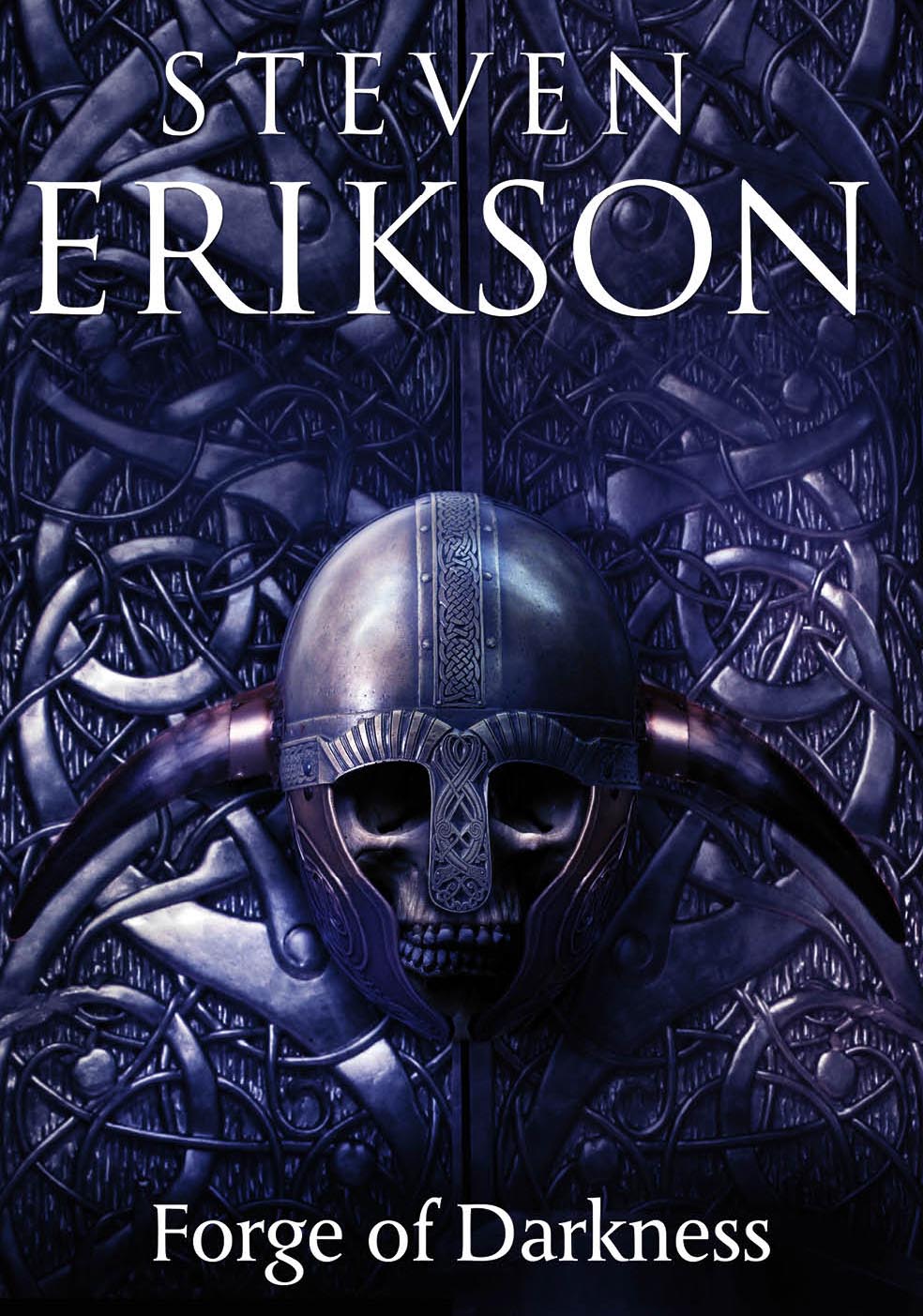
Book review: "Forge of Darkness" by Steven Erikson

This was a bit unexpected, but after reading first two chapters of "Forge of Darkness" on Tor.com (link), I just couldn't stop myself and I had to buy the book immediately. I am more of "what is done, is done" type of person and I don't like milking of a dead cow by inventing endless sequels and prequels. But "Malazan Book of the Fallen" is one of my favorite series so far (I hate saying something is best or number one, but if someone would put a gun to my head and asked me what my best series is, I would squeak out "MBotF") and I have something of respect and belief in Steven Erikson that whatever he writes, he will give the utmost of himself. Curiously, I have these same feelings for Guy Gavriel Kay's books - although I didn't like all his books, I will read any new one he writes. But anyway, I expected "Forge of Darkness" to be something of a classical prequel, explaining something already know, but in more details. Instead, we got a new series capable of rivaling even MBotF, if they weren't so intertwined.


First I would like to say that "Forge of Darkness" can be read without knowing anything about "Malazan Book of the Fallen". FoD actually has a softer introduction to this setting than it was "Gardens of the Moon". A new reader starting with GotM will be confused for most of the book, with abundance of details about characters, mythology, world and especially magic. A new reader starting with FoD will found an unique setting focused on characters and social relationships - only later will all the strangeness and uniqueness of this setting come knocking (or better said, banging) on the door.

So, to a newcomer, the plot will sound something like this: several years have passed since the wars that were imposed on Tiste people and they had enjoyed the peace and prosperity. But new troubles are brewing. Soldiers, who have given so much of their lives and futures, feel neglected and ungratefully pushed aside now that the wars are over. Ruler of Tiste, Mother Darkness has recently reached to the godhood, and this helped to unite the most of Tiste in common faith. But her stubborn insisting on keeping her Consort Draconus at her side has served to make the nobility resentful toward him. Some elements of the army recognized this as opportunity to sow turmoil and restore their own importance, but all their plans will be revered by sudden emergence of some entity from sea of Vitr on the North.

For the fans, it enough to just list a few name from Dramatis Personae: Anomander, Silchas Ruin, Andarist, Draconus, Osserc, Caladan Brood, Kilmandaros, Hood, Gothos... But don't expect this book to be full of fanservice details and treats. These characters where mysterious in MBotF, they stay mysterious here, and I don't expect you fill find much revelations about them in subsequent parts. But this is all right, because this mystery is a necessary part of them. There is a lot of new characters, and you will follow this book through their eyes and their wonder. Even though some details can be seen as contradictory compared to MBotF, they are not, really - a lot of history is changed in 300000 years. Also, Erikson never really skirted from concept of unreliable narrator. So, to me, everything here seamed plausible, convincing and consistent - feel free to think otherwise. Imagine reading MBotF after this - it has become a series to read at least thrice: first time, a reread to defeat the confusion, and then reread after "Forge of Darkness", when everything you thought you knew is set upside down (well, not everything, not even much; but this book put some characters in completely different light).

Even though he said here that "Kharkanas Trilogy" will be different from "Malazan Book of the Fallen", and be more of a traditional fantasy, this is the usual Erikson. As I said, introduction is a bit softer for the new readers - at least the first quarter of the book. But ultimately, this book proves as a much more brutal start of the series than it was Gardens of the Moon, reminding me more of the later books in the series, as "The Reaper's Gale" or "Toll the Hounds". There is a surprising amount of sexual violence in later parts of the book, and they are very explicit - didn't expect it. Sure, there was rape and torture before (e.g. "Reaper's Gale"), but not like this. Erikson is not easy to its readers; at the contrary, he makes them go through some hard experiences. As can be expected, there is a lot of tragedy - even thought I knew from MBotF about some endings, I still hoped they will not realize. And I must admit that the last POV in this book made me shed a tear.

On the happier side, I can testify that Jaghut are funny as ever. Writing is beautiful, but I expect that lots of newcomers will be rejected with typical Erikson's monologs about philosophy. This is one thing in which "Gardens of the Moon" proves to be easier for the new readers, as it consist mostly of action - this side of "Forge of Darkness" is more similar to "Toll the Hounds" and later books.

For the conclusion, I want to say that with "Forge of Darkness" Steven Erikson succeeded in making a new series great as "Malazan Book of the Fallen" in quality, but different in its substance. It definitely deserves a recommendation for all fans - but expect a new and independent series and be ready to be swept of your feet. As for the unfamiliar readers, if you expect more from your fantasy than action, and like gray morality and hard questions, give this book a try.

Tuesday, February 28, 2012

Book review: "Orb Sceptre Throne" by Ian C. Esslemont

Few days ago I finished with "Orb Sceptre Throne" (this is the exact title on my book - there was some confusion with right spelling and commas), a latest installment in "The Malazan Empire" series (ah, so this is where is saw it - on the book itself) by Ian C. Esslemont. I had some big expectations from this book, since these two series set in Malazan setting are two of my favorites. Also, from my re-read of "Night of Knives", "Return of the Crimson Guard" and "Stonewielder", I expected this one to be of similar quality - not as good as Erikson's, but good in its own right. Comments that it will involve a great deal of Seguleh (on of peoples much referenced but never fully explored by Erikson) were enough to bring water to my mouth.

There will be some very minor spoilers, regarding who partake in this book, so don't read if knowing this would be a problem.


(First cover without the ships, wow!)

A surprise waited me on first few pages when I started reading "Orb Sceptre Throne", in Dramatis Personae - I knew most of the names. Sure, there are a lot of Seguleh as new characters, but since a biggest part of book is taking place in Darujistan, you will immediately recognize major players. Esslemont has "borrowed" some characters from Erikson few times, which was to be expected, since it is their joint project. But before they were characters introduced by Erikson and only briefly covered, and never POV characters (at least I think so). This time we are talking about some big names: Kruppe, Rallick Nom, Torvald Nom, Barathol Mekhar, Krull Bar's crew; and a lot of others. These are characters that took place in two or three books now, that were written marvelously by Erikson and had a solid base of fans (in case of Kruppe, we are talking about one of the defining characters of series) - so it is only natural that I was being fidgety about idea that Esslemont could take them and ruing them for me (relatively to Erikson's quality).

Regarding story, we have three and a half independent lines. The major one is of course in Darujistan. A knowledgeable fans were probably able to pick this from bare mentioning that the action is taking place there, but I will say it outright here - it extends hints provided by Erikson (some of those are trailing even from the first book, "Gardens of the Moon") dealing with the Tyrants of Darujistan. And as could have been concluded from the "pickled Seguleh incident", it involves Seguleh greatly. The half-part is connected to the first one in Darujistan, but it doesn't take place there until the very end. Second one was a bit of surprise for me - it is about Antsy (another very familiar character, although without much POV coverage from Erikson) and several other companions exploring the sinking Moon Spawn. And third one is one now typical for Esslemont involving Kiska (and Leoman) and her search for Tayschreen.

Stories are all decent enough but I must say I expected more. The one in Darujistan is good - it involves some politics, a lot of action and in its course reveals much, but not all. It had some good element surprises - Caladan Brood and his apparent loss of influence; true history of Baruk and Torud Cabal; dealing with Malazan; re-appearance of Topper in Empire affairs... Antsy's search over Moon Spawn wasn't bad either, but it provided no importance in bigger scheme of things. Mostly it reminded me to some old RPG quest where you have a company that you need to guide over some cave and use their each special ability; or to some Forgotten Realms books I've read. And for Kiska's part, let's just say that it wasn't nearly as good as her part in "Stonewielder" and I wasn't sad because of it shortness.

And now we have come to the biggest problem of this book: characters. I am very sorry to say that Esslemont blew it. Not completely and not too much, but I will not be expecting his next book very much. Most of the characters are written passable: Rallick and Torvald, Blend, Picker and rest of the gang, Malazans. Some are even written great, like Scorh and Leaf, Madrun and Lazan Door. But most important ones were not as good as they SHOULD have been to make this book work. I presume that writing Kruppe and his extravagant speech are hard - but if you can't do it right with a character this important, you shouldn't even try. And Traveller?! With few brief mentions Erikson made him good. With him as a main character in one book, he made him one of the most tragic character in whole series (and isn't this doubly true?). Esslemont did very good with him in RotCG, but here, he made me wonder who this person is? Did someone other took place of Traveller I knew? Few characters that Esslemont did on his own were nice, especially Bendan and other Malazans.

Another disappointment were the Seguleh. Well, not them in general, but in particular. Sall was only intriguing character of them. Esslemont had some great potential with Jan and could have made him tragic and great - instead he took a cheap and easy solution which could be good enough in some other series, but not in one with caliber of Malazan Book of the Fallen.

Also, what happened with Iskaral Pust and Mogora? If I remember correctly, they were both in Darujistan when we last saw them. On the other hand, I am happy that Esslemont missed to screw him also.

Regarding the style of writing, it is typical Esslemont - a lot of action and dialog, much less philosophy and need for reader to think - more straightforward then Erikson in "Toll the Hounds" that can be taken as prequel of this book. This makes it easier to follow and relax into it, but even though Erikson's style was much harder, I think it was one of the things that made MBotF what it is. Although, I am at least glad to say that Esslemont has finally started to take a grip on the humor. All in all, the book was fun to read and I finished it in few days only.

These last three books left me wondering about the future of this setting. With Crimson Guard, Korel, and now Seguleh and Moranth, Esslemont doesn't have much more new unexplored parts of the map to drain. Actually, only one that I can remember that was left unexplored is Jacuruku...

All in all, I am not very satisfied with "Orb Sceptre Throne". With solid weight of MBotF behind it, Esslemont is guaranteed to have a large fan base as his readers - but on the other hand, he has to do his part and keep as satisfied. I presume that most Malazan fans will have the same opinion of this book as mine: a good enough book with occasional brilliant parts, but Esslemont will have to work harder if he doesn't want to lose our trust, if it's not already late for that.

Friday, February 24, 2012

Book re-read: "Stonewielder" by Ian C. Esslemont

So, I finished the last book of this re-read (a week ago, to be sincere) before starting with "Orb Sceptre Throne".


Contrary with "Night of Knives" and "Return of the Crimson Guard", and to my first read of "Stonewielder", this time I found it not as good as first time and not as good as its prequel. SW continues some time (a few years, I think, although time-line is somewhat blurry I must say) after RotCG. I involves few characters from it (Greymane, Kyle, Fist Rilish, etc.), but mostly introduces a new set of characters (although not as large as in RotCG). But more importantly, it expands the setting with further exploring of Fist subcontinent, which was only referred to until this book. So bunch of new characters are from here, but also new historical setting and trivia (which was one of high-light of this whole franchise). Typically, it involves many independent POVs and plots which all clash at the end.

I said that book is not as good as RotCG and that I didn't like it as much as first time I read it, but the difference if very small. Even though it is not on the same level as Erikson's works, this third Esslemont's book provides a good continuation of story. It lacks the depth and grandness of Erikson, but it has good enough humor and intense plot. Characters are almost as good as Erikson's, although there is no so many internal monologs and trains of thought that fans learned to like. Esslemont places more focus on story and action, but this is not a bad thing - book is easier to follow and enjoy.

To put it short, "Stonewielder" is one of poorest book in Malazan series, but it is still good enough for most fans to enjoy, providing they don't get their expectations too high.

Wednesday, February 15, 2012

Book re-read: "Return of the Crimson Guard" by Ian C. Esslemont

Once again I am late with my posting. I already finished "Stonewielder", but only now I am writing about my experience of second-time reading "Return of the Crimson Guard".


As with "Night of Knives", this time the book was better. And since the book was very good initially, I am happy to say that I enjoyed it immensely. RotCG is much more serious book than NoK - around 1000 pages long, with enormous cast and quite epic. The book was very expected by the fans because it finally put in focus the Crimson Guard, who has been touched quite often by Erikson, but never explored deeply. Esslemont does a great job with it, revealing a lot, but also creating many teasers - a lot of things are left hidden. Another thing that Esslemont pulled off was satisfactory but not happy ending. The book has a nicely wrapped ending, but if you look closely, the most despised character in whole setting has made an advance. Book contains some great action scenes, especially toward end, where we have several cascading battles.

Another thing that was done nicely was typical Malazan concept of grey characters- neither good nor bad. In this book, contrary to NoK, Esslemont invented a lot of his own character, while only few were borrowed from Erikson. As in first reading, my favorite character was Sergeant Jumpy. Oh, yeah, humor was done on completely different level than in NoK.

So, my second reading of "Return of the Crimson Guard" only strengthened my opinion of it as an obligatory book for all Malazan fans.

Sunday, February 5, 2012

Book re-read: "Night of Knives" by Ian C. Esslemont

This will be just a short post. Since the new book by Ian C. Esslemont, "Orb, Scepter, Throne", was published few weeks ago (and I of course bought it immediately by a pre-order), I decided to read all prequeling books.

Funny, I am positive that books set in Malazan world and written by Esslemont are part of "Malazan Empire" sequence, but I can't find any references to this name (except in my older post; later: ah, there it was, at Amazon). Anyway, "Night of Knives" is the first book in this sequence and it depicts the events on the night of Kellanved's and Dancer's return to the Empire after a long-time absence. My original post about it can be found here.

Now, when I read it for the second time, I found it better book than the first time. Then I was focused on finding flaws in it and comparing it to Erikson books. This time, I was purely enjoying it. Also, I was trying to find hidden references and explanations that can be connected to the events in Erikson's "Malazan Book of the Fallen". Since even thought his series is finished, there are still small billion of unexplained facts, concepts and details, so I appreciate every work that contribute in revealing more of this marvelous tapestry.

As before, I recommend this book to all Malazan fans out there, even though it is the weakest book in whole opus. Those who are not familiar with this setting I would recommend to start with "Gardens of the Moon".

Tuesday, November 8, 2011

Book review: "The First Collected Tales of Bauchelain and Korbal Broach" by Steven Erikson

I have recently bought a collection of short novels by Steven Erikson, set in Malazan World and featuring Bauchelain and Korbal Broach, two minor comedic characters from "Memories of Ice", and their even funnier manservant Emancipor Reese (aka Mancy the Luckless). Truth to be said, I expected them to be a bit lengthier; it is less than 400 pages long.

Stories from "The First Collected Tales of Bauchelain and Korbal Broach" are not intended for everybody - it is clear that Erikson wrote them for fans of his books. He usually isn't one to give clear explanations and introductions to his settings, but this is even more pronounced here and it is especially true for first story. I presume that second two could be read by anybody, but a good portion of jokes and references would be lost on those who never read main Malazan books. This collection is intended for fans who can understand the humor of accidental vomiting in a bowl of worms and excusing it as an offering for Drek.


First story, "Blood Follows", is what I expected of it. It describes Emancipor's first encounter with Bauchelain and Korbal Broach (I don't know why, but he is always referred as Korbal Broach, never only Korbal or Broach) and it takes place in town of Lamentable Moll. He has just lost another employer (another on a long list of dead ex-employers, thus Mancy the Luckless) and after getting drunk in his honor, he goes to apply to mysterious job-offer. At the same time, Lamentable Moll is in panic because of line of gruesome murders where victims lost a part of their bodies. Sergeant Guld, a famous investigator, is feeling he has come to edge in his search for perpetrator...

Second one, "The Lees of Laughter's End", is similar in its dark tones to the first one, but very different in realization. It takes place exclusively on a ship: we have Bauchelain and Korbal Broach with Emancipor; young seer that talks with her dead mother; Captain that know nothing about shipping and relies completely on her First Mate; three ex-soldiers with one brain between them; stolen statues of unknown origin and power; ship's crew scared out of their skins. If this is not enough, ship is currently traveling over Red Road, where every kind of potential can get realized...

The last one, "The Healthy Dead", is typical for Erikson, and deals with the topic of rulers with good intentions. City of Quaint was a normal city few years ago: corrupt rulers, unhappy citizens, poor peasants. A normal kind of city. But the latest king has decided to makes his citizens more healthy, for their own good, regardless of their willingness. Bauchelain and Korbal Broach end up hired by the locals to put things back in order, but they will do it in their own, unexpected way...

One thing I like about Erikson is that he doesn't take sides. There are many examples of this when a character (or group of them) that has been depicted as evil, turns out to be a just a human, neither good nor evil. Good and evil are very relative terms in Erikson's books. But he did a truly marvelous thing here: he took two characters that would be deemed as evil from any other writer and wrote a book with them as main characters, without taking sides. Bauchelain and Korbal Broach here do some really evil things. I mean really evil: the missing ear scene is quite morbid, but the scene with Bloodwine is especially noteworthy; people get killed and mutilated in unexpected amounts. But not in one instance does he take opinions and try to judge. He does make fun scenes, but in every one we can find the suffering of victims. If his intention was to shock us and make us think about good and evil in people, he succeeded completely.

On the side of humor, he did his regular job, which means great. You will find here a regular collection of his extreme characters. As I said, you should me familiar with this setting to appreciate all the jokes. Action takes place somewhere on the continent of Korel, which is part of the world not much explored by Erikson. Only three main characters here are known from before, but you will find other ones familiar too, in style if not in substance.

His writing is typical: lots of dialogue, but also lots of monologue. I have been recently reading Raymond E. Feist's books, and it is marvelous how different these two are in their style. For Erikson is normal to read four or more pages where no one said anything and nothing happened but some characters discussing some metaphysical subject; with Feist, you will be surprised to find one such paragraph.

If I haven't been clear enough about it, this book is even more violent and bloody than Erikson usual, just that you know.

"The First Collected Tales of Bauchelain and Korbal Broach" is a great collection, but intended primary for fans; as such, I would advise it to any fan of Steven Erikson. Great fun to read, but also a thought-provoker.

Wednesday, May 4, 2011

Great review of "Malazan book of the Fallen" on SFsite

As the title says, there is a great review of "Malazan Book of the Fallen" on SF Site that I would recommend to all who plan to start it to read before. Author really succeeded on compiling everything imporant about the series on one article. Visit it here!

Tuesday, April 26, 2011

Book review: "The Crippled God" by Steven Erikson

Wow, after three months I finished the whole Malazan Book of the Fallen series. Sure, there are still Malazan Empire series by Esslemont and several short stories by Erikson, but I will leave this for another occasion. Ending a series is always a bittersweet experience. From one side, this is what you have been expecting, the reason you are reading it, culmination and revelation. On the other hand, you know that this is the last time you will meet your favorite characters. Sure, there is always possibility that author will give it another try and make some sequel or cameo, but in most cases this fails and it leaves a bitter taste of greed (trying to squeeze more money from franchise).


But, because of uniqueness of MBotF, "The Crippled God" doesn't follow this exact model. From the beginning with "Gardens of the Moon" to tCG, it never felt like classical fantasy: meeting the main characters at their beginning and the following them until their retirement (literal or figurative). But with this series, you were plunged into already rushing stream: there were no clear main characters; some were close to their "retirement", somewhere at beginning, but all gave impression of being bigger than just characters for these books. The same is true for plots. There are several plot that were finished here that we didn't even see start, and there are some there were started but were not finished. Add to this Erikson's style of writing, and it all just gives a feeling of history only glimpsed, with much more potential. Fortunately, this is true and Erikson does plan to publish more books in this setting, with familiar characters.

Now, to the book in question. "The Crippled God" is not the longest book in series, but with 900 pages it far from shortest. It is split in 7 parts, of which six comprise first half (or little more) of the book and last one takes the rest. This is a bit unusual for Erikson, but it clearly shows that this is the last book. It also has two epilogues! Since this is a direct continuation of "Dust of Dreams", there are no Dramatis Personae and we immediately start with the plot. For those first six parts, chapters are split in strict structure, with different sets of POVs. We have one, giving the Letherii, Bolkando, Grey Swords, Fellush (which is a great addition!) and Gesler and Stormy with K'Chain Che'Malle. Then we have the Bonehunters, with the Snake and Khundryls. Third set is Shake and Sand and Withal. We also have many minor one inserted between: Draconus, Elder Gods, Ublala Pung, T'lann Imass, etc. It would be too much to write them all and I am not even sure I could remember them without forgetting a few. What I can say is that some characters are missing. And by that I mean some important characters! There are few cameos in here, but I hope Erikson will decently and successfully continue these ones. Last part is one big storm of alternating POVs, a real action-bomb. It feels much longer that it really is.

Plot continues events started in previous books. Pace is much faster that in last few books. There is a portion of typical Erikson's philosophy discussions and observations, but when POVs start to alternate, the pages are really flying. And this is my first objection: the book could have been longer. Main POVs are decently explained and described. But there are many clips with important characters getting only a few lines to see what they are doing, but without expanding it. I know it's no use to second-guess if this is what Erikson wanted or was he forced to do (externally or internally), but were stuck with it. Few hundred pages or even a whole book with alternative POVs would have been much appreciated. No objection to the plot itself, although I feel like I will need at least two more re-reads to completely understand it. Expect several 180° turnovers.

My second objection regards characters, Well, one character in particular. There is not many new characters here, "only" a few Forkrul Assail and dragons. And all of them are done usually well. But I just couldn't stomach the Crippled God. I got used to grayness of Erikson's characters and how he completely succeeds in making them lovable, honorable, decent, disgusting, etc. at wish. But Crippled God just didn't fit in anything we knew about him. Thankfully, rest of the cast done great. Some were funny, some very disgusting, some were scary, but all of them are written extremely well. As with plot, expect surprises. I was forced to change my opinion of some characters (again).

I also want to get me final objection of my chest: I didn't like the conclusion. By that I mean the first epilogue. It was like somebody else written it. It felt too much high, which doesn't belong to the gritty and down-to-earth fantasy series Malazan Book of the Fallen is. Honor guard, kings and queens in attendance, last salute to dead friends... It just didn't fit in.

Now, after I said that, let's go to the good parts. First scene with Hood is great!! After reading it I was stunned for few minutes, thinking "Did he just ATE her f*** face?!?!?!". That was one of most bad-ass entering in whole series. Unfortunately, this book is missing some of the funny characters, but Tehol ("Have you already slept with her?"), Spax, Fellush (and handmaid) and few others manage to add some very enjoyable funny moments. Traveling the Glass Desert was one of the best "torturous journey" depictions I have read since Frodo and Sam's journey through Mordor. There are too many good scenes to name them all, but these two had to be singled out.

"The Crippled God", even though it is not Malazan book out, is nevertheless one great book. It is not perfect, but Malazan fans know better to expect perfection. I hope that all reader will be satisfied with this much as I was, if not more.

Tuesday, April 19, 2011

MBotF reread: "Dust of Dreams" by Steven Erikson

OK, now we are getting somewhere. I have finally finished "Dust of Dreams" this weekend and I am currently reading "The Crippled God". After more two months of rereading... Not only that this was tiring, it is first time in my life that I have a to-read-pile! And to be worse, four books: "The Crippled God", "Way of Kings", "Empire in Black and Gold" and "The Cold Commands". I think I will need somewhere around two weeks for reading tCG and after that I am taking a brief vacation from reading... I plan to watch some anime, or something.


Now, to the book. It's kind of funny when you catch yourself thinking "What the f*** are they talking about?!?!" while reading a dialog in 9th book in series, between characters that you know for five books. It also tells something about Erikson's writing style: it doesn't spoil the readers. There is no way to completely avoid info-dumps, but he is good at masking them. There are no visible seams in his books. You also how to admire how he is able to turn everything you believe with every new book. But not just that; he succeeds in inviting a faith that he will somehow make everything believable and plausible. Currently, I don't see how he can do it in one book.  I have read one or two spoiler-free reviews where authors indicated that Erikson actually doesn't give all answers in last book, but instead continues with his usual politics: rising three questions for every answer. I have split opinion about this solution. On one side, I will be an angry little and petty fan if I don't get all the answers right now. On the other side, this has long-term advantages. With every reading or discussion about it, your view on things will be able to change and these books will stay fresh for long time. Also, this way Erikson leaves place for seamless sequels or prequels. This makes sense when you consider a fact that he announced some prequels... I see I got little off track. Message I wanted to express was, that as usual, even though in is penultimate book in series, there are no easy answers. It reveals and sketches some new characters, new concepts, new races... I really admire this and think it's very brave.

First part of book is not as usual with MBotF. I wouldn't call it boring, but it's much tamer than we are used to. It is not self-contemplative as "Toll the Hounds", but there are still many monologs and wandering to thought. There are many POV's here, some from old characters, but many from new, temporary (the ones that don't appear in more than one book; at least I don't think they will) characters. We again have many Malazan soldiers, many already know, but also few new ones. There are several Letheri POV's, but they don't appear often and server more to describe Malazans from external point. Malazan are as usual funny to read, but it also interesting how they are starting to show some darker tones. Contrary from previous books, Letheri now look much more likable, even more that Malazans. On the other hand, there are some old and some new Baraghast characters; it was a surprise when they reappeared at the end of "Reaper's Gale". We also have a first K'Chain Che'Malle POV. I must say, although I would expect them to be more alien. I really appreciate blending of fantasy with SF in their case. We again have one journey-POV: Rutt, Badalle and the snake of children. I am not sure how they belong to the great picture, so I will refrain from giving any final thought about them, but they weren't very funny to read. There are also Khundryl and Grey Helms POVs; they are interesting and often funny, complete with the Bolkando's POVs.

As with TtH, you just have to read the ending in one sitting. It takes last 100 or so pages, so be ready. It is very well written, but it doesn't feel so good to read it. You being to question will the series have a happy ending. Also, when I think little about it, I don't see what would have to happen for this series to end happy. We have been following so much confronted sides that it is impossible to have them all (not even the majority) satisfied. During the course of these books, dead rarely stayed dead. I have a feeling that this statement will be in questions after last book.

I surprised myself with the amount of things I forgot. There are whole plot-lines I didn't remember, characters I didn't recognize... There are really important facts I got completely wrong. I have a much more solid picture right now, but sheer amount of information in this series makes it impossible to juggle everything in your mind.

Since "Dust of Dreams" was actually intended as first half of the last book, it is not possible to give a final verdict without reading tCG. But even without it, this book is a very decent MBotF book, with somewhat slower beginning, but very strong ending. I can't imagine that any fan would be disappointed.

Wednesday, April 13, 2011

MBotF reread: "Toll the Hounds" by Steven Erikson

Huh, getting closer to "The Crippled God"... I am now a bit confused about how many times have I read these last few books. I remembered events from "Toll the Hounds" very well, while "Dust of Dreams" (which I am reading currently) is almost like a new book to me, even though I would swear I have read both books only once. Since DoD is a bit shorter, I have hopes of finishing it this week.

(TOR cover)

(some fun-art)

"Toll the Hounds" is a very strange book, compared to the previous ones. Erikson always had a tendency to use his characters as tools for analyzing philosophy, psychology, history, archeology, etc., making sometimes unexpected choices as with simple soldiers uttering deep questions. But in this book this was taken to a whole new level. As before, chapters are divided by different POVs. But now, each POV consist of few pages of internal monolog or reminiscent, after which we have a page of two of actual dialog or action. I don't know how common is this, but I belong to those readers that sometimes got lost on page. Meaning, I sometimes catch myself after "reading" half of page, without knowing what I have read because I was thinking about something prior to this text. Then I have to repeat this skipped text. With TtH, this happened very often. Of course, this is not to say that this not interesting, but it is very inviting for wandering thoughts. Without all this, the book could be compacted in some 300 pages, but then it wouldn't be this book.

Of course, this is true only for first four fifths of the book. Last 150-200 pages are to be read in one breath. Really, treat yourself and somehow make your schedule so that you can read the end in one reading. Because this is one really exceptional ending. Erikson's books and endings are usually unexpected, but if someone would even suggest that he (or she) had a feeling that this was coming, I would call him a liar. Even if you hate most of this book, ending really deserve to be read.

One more difference is that this is the only book to have a narrator, one that actually addresses the readers. Kruppe was never my favorite character (not that I didn't like him, but he just wasn't among the first choices), but this role fits him nicely.

From mentioning Kruppe, you can guess that TtH takes place on Genebackis again. Chapters also follow similar concept as before, alternating between two sets of POVs. One is Darujistan residents: Kruppe, Cutter, retired Bridgeburners, Scillara and Barathol, some nobles and some more shady characters (which doesn't mean that nobles are not shady). These chapters are somewhat easier to read, with more humor and more action. The other set of characters follows Nimander Golit and his Tiste Andii traveling with Clip, Traveler, Karsa and Samar Dev, Kallor and several residents of Black Coral. These POVs are quite melancholic, almost depressing, although not uninteresting. Oh yes, I almost forgot. We are also following Trygalle Guild, accompanied with Gruntle and Mappo.

Few more things I would to emphasize. In some ways this is a Jaghut book, because we have several characters belonging to this race. Although this doesn't mean they are not mysterious any more. Next, Kallor. Most fans would say that they already had set opinion about him, acquired in "Memories of Ice". Well, typical for Erikson, get ready for surprise. Also, several fans, commenting on Malazan Reread of the Fallen on Tor.com, decreed this book a "Rosetta stone" of MBotF. Although many new facts are presented in TtH, I wouldn't call this book any more explanatory than others.

In conclusion, I admit that some readers could be off-put by this book, but if you are fans of MBotF, bear with it until the ending and rewards it brings.

Saturday, April 9, 2011

MBotF reread: "Reaper's Gale" by Steven Erikson

I must say that this whole reread is starting to overwhelm me. I never planned this to drag so long: it is April now, and I still have two more books to read before even starting with "The Crippled God". And due to work, time I need to read a book has grown to two weeks or more. I planned to do this again next year for Wheel of Time, but I am not so sure anymore.


Now, let's get back to "Reaper's Gale". First, Ublala Pung and voyeurs.... Ha ha, one of the best funny scenes in series. I always crack when I remember it. There are numerous jokes and puns in this book, but RG doesn't follow "The Bonehunters" in being a totally crazy book. Instead, jokes are much more moderated and decent; mostly regular bantering that anyone would expect between old friends.

First part of the book focuses on Empire of Lether and their social and moral degradation. I don't think there is any reader who would sympathize with the Patriotist; you really have to admire Erikson when it comes to writing of totally unlikable characters (just remember Jhistal!) that are at the same time totally believable. Also, Erikson never skirted from graphical violence, but physical details of Janath's torture are bit too much even for him. All this makes Lether not very desirable place to live, and without Tehol's and co parts it would be much harder to read. We also follow two traveling parties. One is Udinaas, Silcah Ruin and rest, which are not very cheerful bunch. In some way their plot-line is similar to mhybe's in "Memories of Ice": not clear on what is really happening, believing that is important, but wishing that it ends soon. The other party consists of Quick Ben, Trull, Onrack and later Hedge; they are all nice characters to follow, although after some time Trull's and Onrack's emotionality becomes irritating. Awl part of the story is very nice; I like reading about military campaigns and reappearance of Toc the Younger (on of favorite character in series for many readers) gives it an extra kick.

But the part that makes this book one of my favorites in series is Malazan invasion of Lether, executed my marines. This is a great bunch of characters, consisting of some old stars (Fiddler, Gesler, Stormy...) with addition of younger generations (Hellian, heavies, Bottle...). Their dynamic is always great to read you just have to root for them, after everything they get into. Whole concept of leaving few hundred marines in hostile territory, with no support or real command, without knowledge about enemy, it is impossible not to like. Erikson manages to make their transformation to crazy killers almost sympathetic (e.g. Bottle's chewing on grass).

Sequence with Beak is almost heart-breaking as the night on Malaz island in tBH. This reminded me: Adjunct's speech, although unimpressive and unimposing, nevertheless manages to touch me. I also like how everybody knowledgeable holds Icarium in awe or fear.

I am starting to sound like a parrot, finishing every post with recommendation for MBotF, but that's just the way it is. "Reaper's Gale" and Malazan Book of the Fallen are obligatory read for every fan of complex, convoluted and gritty epic fantasy.

Thursday, March 24, 2011

MBotF reread: "The Bonehunters" by Steven Erikson

After finishing "The Bonehunters" and starting with "Reaper's Gale", I have came up to two realizations. First, I haven't read those two books enough times. (this is probably true for "Toll the Hounds"). I know this because I am constantly coming across details I forgot or even didn't know at all. I expected that I will find some unknown facts or that I will see something in another light, considering that I have read almost whole series now, but I didn't expect such amount of that. I was sure that I have read these two books at least three times, but I am not so sure now. Second, all this rereading is starting to take its toll. I am not enjoying these book as much I should; at least partly, my objective changed from "rereading and enjoying" to "just finishing these damned book". Definitely, after finishing the series (I expect this to be in 6-8 weeks, considering that I need almost two weeks per book) I will have to take some rest from reading. I will watch some anime or something. On the other hand, my reading pile has never been larger: "The Crippled God", "Empire in Black and Gold" and "The Way of Kings". Wow. Soon there will be fourth book.


Now, to the book. After "House of Chains" and "Midnight Tides", whom I referred to as transitional books, we have arrived to Erikson a bit different that the first books. It is still everything that marked this series: complexity, style, characters... But everything is taken to extreme and over. This is most evident if first portion of book: (literary) every sub-chapter (I am referring to parts of chapter where we follow one point of view) is crazy. Hilarious, sarcastic, unbelieving, confusing, extreme in every way: crazy! Consider just first such sub-chapter: Iskaral Pust's audience with Shadowthrone. I can't begin to imagine what some casual reader, someone unknowing of MBotF, would think about it... And I said, this takes a good part of the book. In later stages, this extremity is a bit diluted, but still present.

"The Bonehunters" is one of my favorite books in series. First, we are back to Seven Cities, and as I said, I adore the long history of it. Second, there is a bunch of my favorite characters here:  Fiddler, Iskaral Pust, Kalam, Quick Ben, Malazan marines, Grub... Third, we have three culminations in this book: Y'Ghatan, G'Danisban and Malaz City. Fourth: each of those culminations, and especially the last one.

There are many plot-lines in this book, but lets' just consider a few important ones. Malazan 14th army is represented very well in the book, with several POVs. It can probably be said that this army is the main element of "The Bonehunters". It also have to be mention the existence of the monster-chapter, somewhere around the middle. It depicts the battle and aftermath of Y'Ghatan and it is long as several normal chapters. And also one of the best. The ending in Malaz City is also one of the most bitter one in the series, right behind the one of "Deadhouse Gates", near Aren (not counting the one in "Dust of Dreams", since I still don't know the consequences of it). Paran's plot is a good one, although he became a bit too-powerful character, so the outcome of his battles is always expected. Karsa's plot is a very interesting, especially the way it is viewed from Samar Dev's perspective (and she is also one great character).

The only POV I am not very satisfied with is Crokus'. First part of the their travels is OK, although with not much impact. But the event's toward the end of the book, encompassing "the green fall", are very confusing. I read this part at least three times and I consider myself well versed in MBotF, but this event still present total mystery. OK, I know what happened, although not very exactly, but the meaning of it is totally out of my range of reasoning.

But, except this little flaw, this book is a brilliant gem in Malazan Book of the Fallen series. For all fans that stick with the series, this book will be a great addition.